Can you dry clothes on a balcony?
Physically, easily. Legally, it depends on three documents, and this page tells you which ones to read.
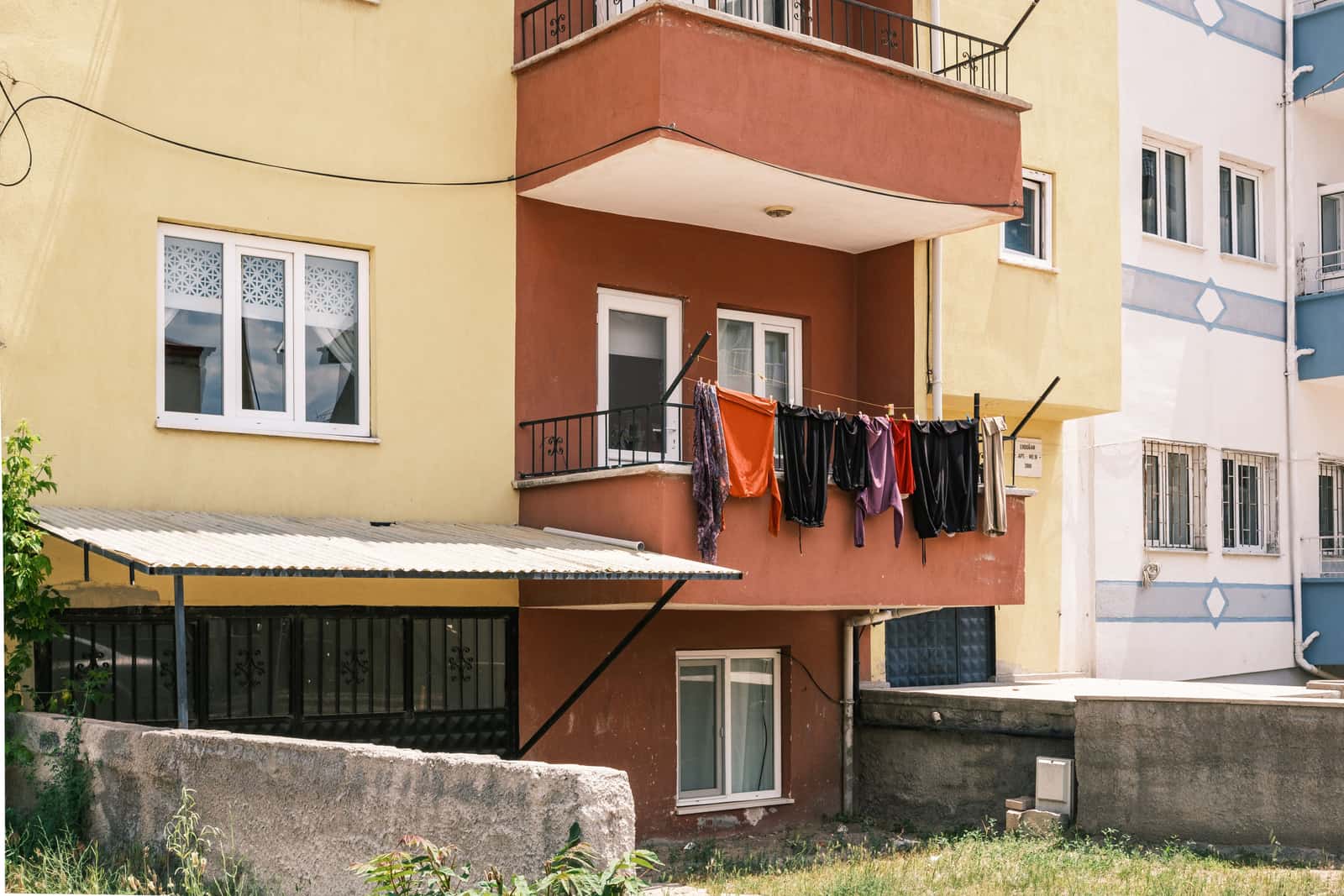
This is the one question on this site where the answer is not physical. Balcony drying works everywhere; whether you are permitted to do it is a question about three documents, and we can tell you which ones and what to look for rather than what they say.
The three documents, in order
- Your lease. The clause is usually in a section about the use of balconies, patios or common areas, or about the exterior appearance of the building. Search the document for balcony, patio, laundry, clothesline, hang and exterior.
- The HOA covenants or building rules, if the building has them. These often restrict visible items on balconies as an aesthetic matter, and they usually bind the landlord as well as you.
- Your state's law. A number of US states have passed right-to-dry or solar-access legislation limiting HOA restrictions on outdoor drying. The scope differs substantially between states, and the interaction with a private lease is not the same everywhere.
What the clauses usually say
| Clause type | Typical wording pattern | Practical effect |
|---|---|---|
| Blanket prohibition | No items may be hung from or stored on balconies | Includes laundry, and usually plants and bikes too |
| Visibility restriction | Nothing visible from the street or common areas | Below-railing drying may be acceptable |
| Railing restriction | Nothing attached to or draped over railings | A free-standing rack set back may be fine |
| Safety clause | Nothing that could fall from the balcony | Reasonable, and worth honoring regardless |
| Silent | No mention of laundry at all | Generally permitted; ask if unsure |
The distinction that matters most
A prohibition on attaching things to the railing is different from a prohibition on drying laundry. Where the clause is about the railing, a free-standing rack set back from the edge often complies with the letter and the intent of the rule while still getting your laundry into the sun.
Similarly, a visibility clause is often satisfied by drying below railing height. These distinctions are worth reading carefully rather than assuming the answer is no.
Right-to-dry laws, briefly
Several US states have legislation limiting the ability of homeowners associations to ban outdoor drying, usually framed as solar access or energy conservation. The details vary a great deal: some cover clotheslines specifically, some are broader, and the protection generally applies to HOA restrictions rather than to the terms of a private lease.
If you are in an HOA-governed building and the restriction comes from the covenants rather than your lease, it is worth checking your state - the law may be on your side. If the restriction is a lease term agreed with a private landlord, it is a different situation.
Practical etiquette that avoids the conversation entirely
- Dry below railing height where a visibility clause is the issue.
- Peg everything. A garment that lands on the balcony below is how a rule gets written.
- Bring it in the same day. Permanent laundry reads differently from an afternoon's drying.
- Keep underwear indoors if you would rather not discuss it with a neighbor.
- Do not attach anything permanent to a railing you do not own.
If the answer is no
Then you are drying indoors, and the rest of this site is written for that. Start with drying racks for small apartments or, if floor space is the problem, no-drill drying for renters.
Common questions
Are clotheslines banned in apartments?
Sometimes, by lease or HOA covenant rather than by law. Restrictions are usually about visibility or about attaching things to railings, and those two are different rules with different workarounds.
What are right-to-dry laws?
State legislation limiting how far a homeowners association can restrict outdoor drying, often framed around solar access or energy conservation. Scope varies substantially by state, and the protection generally applies to HOA rules rather than private lease terms.
Can a landlord stop you drying clothes on a balcony?
Where the lease contains a clause about it, generally yes - that is a term you agreed to. Where the restriction comes from an HOA covenant instead, your state's law may limit it. Read the lease first.
How can I dry clothes outside without breaking the rules?
Dry below railing height if the clause is about visibility, use a free-standing rack set back from the edge if the clause is about railings, peg everything, and bring it in the same day.
Sources
- U.S. Environmental Protection Agency - Mold Course, moisture and indoor relative humidity - retrieved 2026-09-02
Why there is nothing to buy here: This is a page about reading your own lease, and the answer is jurisdiction and building specific. No product changes what your documents say, and putting a buy button on a page whose honest conclusion may be 'you are not allowed to' would undercut the only useful thing it does. The racks themselves are on balcony drying racks.
Read next
The best balcony drying racks
Railing racks that hook over a balcony rail or windowsill with zero installation, plus the lease rules to check first.

Drying laundry without drilling a single hole
Every no-drill drying option, ranked by capacity, for rentals and dorms where fixings are not permitted.
The best drying racks for a small apartment
Five racks sorted by the floor they take and the slot they store in, for studios, dorms and one-bedroom apartments.
Apartment laundry without a dryer
A complete drying setup for a small rental, from the rack to the humidity, assuming no dryer and no holes in the walls.
The best outdoor drying racks
Outdoor racks and rotary lines compared on line length, published rating and how they survive weather - plus what sunlight actually does to fabric.