How to air-dry laundry indoors
The whole method, in the order the problems actually arrive: how long, how stiff, how smelly, and how damp.
We have not tested these products and we do not pretend to have. Here is what we did instead. Links to Amazon earn us a commission at no extra cost to you - disclosure.
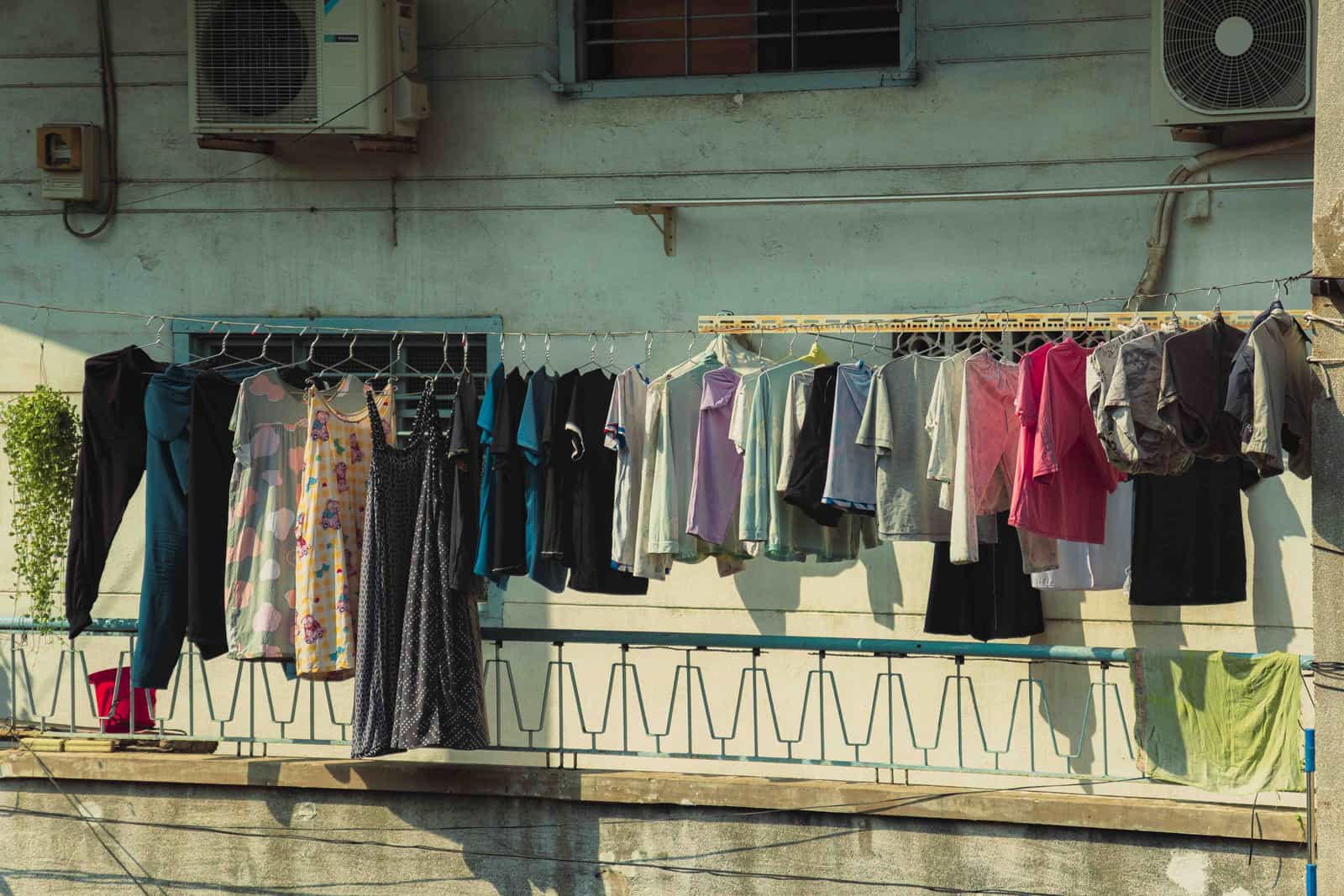
Nobody is taught this. Most people who end up without a dryer learn it by getting it wrong for a few months - laundry that takes two days, towels like cardboard, a smell that will not wash out, and windows running with condensation in January.
All four have the same underlying cause and mostly the same fix, and it is not a bigger rack.
The one paragraph of theory worth reading
Drying is evaporation: water leaves the fabric surface and enters the air. Three things set the rate. Temperature - warmer water evaporates faster. Humidity - air that is already near saturation cannot take much more. Air movement - moving air carries away the saturated layer sitting right against the fabric and replaces it with drier air.
Everything below follows from that. And notice which one is easiest to change in an apartment: air movement, by a wide margin, which is why a $30 fan outperforms a $150 heated rack in most rooms.
The four problems, and where each is solved
| Problem | Actual cause | Where to read |
|---|---|---|
| Takes two days | Still air, saturated room | How long air-drying takes |
| Towels like cardboard | No mechanical agitation while drying | Air-drying without stiffness |
| Musty smell | Fabric stayed damp too long | Air-drying without the smell |
| Windows running with water | Several pints of water added to the room | Indoor humidity and condensation |
| Nothing dries in winter | Cold air, closed windows | Drying clothes in winter |
The method, in order
- Spin it again. A second spin cycle removes more water mechanically, and mechanical removal is free. This is the single most effective step and almost nobody does it.
- Space everything. Garments that touch stay wet at the contact point for hours. See how to load a drying rack.
- Move air through it. A fan angled up under the rack, not blowing at its side.
- Give the moisture somewhere to go. A window ajar, an extractor running, or a dehumidifier in a closed room.
- Get it down as soon as it is dry. Laundry left damp on a rack overnight is where the smell starts.
The rest of the playbook
- How to dry clothes without a dryer - the full guide, start to finish.
- Apartment laundry without a dryer - the same thing, written for a small rented space.
- How to dry clothes faster indoors - every lever, ranked by effect.
- Air-drying vs tumble drying - cost, time, and what happens to your clothes.
- How to air-dry without a drying rack - for when you do not want to buy anything.
- Drying clothes indoors vs outdoors - what outdoor space is actually worth.
- How to air-dry clothes without wrinkles - the two-minute window that decides it.
- Dryer sheet alternatives - why you probably do not need one.
Top pick · Studios and dorms
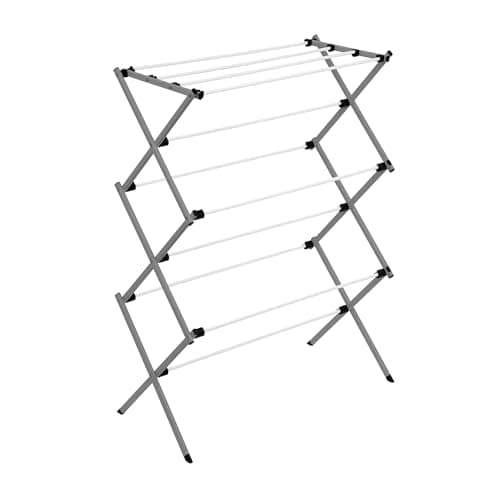
Honey-Can-Do 6-Tier Collapsible Steel Clothes Drying Rack, 24 ft
The best floor-to-line ratio of any rack here: 24 published feet of hanging on under three square feet of floor, and it folds to three inches.
What the manufacturer publishes
- Open
- 29"D x 14"W x 42"H
- Folded
- Folds to 3 inches wide (full folded dimensions not published)
- Drying line
- 24 linear feet across 6 tiers
- Load capacity
- 50 lb
- Material
- Coated steel
Figures from Manufacturer listing on Amazon, retrieved 2026-09-12.
Under three square feet of floor, and 24 published feet of line: 8.5 feet of line per square foot. The Honey-Can-Do gullwing manages 4.9. That ratio is the whole argument for a tiered accordion rack in a small home.
Three inches folded is the number that matters in a rental, and it is published - which in this category is rare. Three inches fits behind an interior door or between a washer and a wall; a gullwing folded to eight or ten inches does not.
The trade-off is bar length. Six tiers of short bars suit shirts, underwear and socks; a bath towel hung at full width drapes over two tiers and slows both of them down.
Good
- 24 linear feet from under three square feet of floor
- Folds to a published 3 inches
- 50 lb rated capacity from a 4.8 lb frame
- Coated steel rods, which survive a damp room better than a bare finish
Not so good
- Short bars - full-size towels and sheets do not hang cleanly
- Six stacked tiers mean the lower rows dry slowest without air movement
- Only the folded width is published, not the full folded dimensions
Skip this if you are mostly drying towels and bedding. Long, heavy items want a wide gullwing, not a stack of short tiers.
#ad · how this is funded · price as of October 16, 2026
Everything in The Air-Dry Playbook
How to dry clothes without a dryer
The complete start-to-finish method for drying laundry indoors with no machine, including what it costs and how long it takes.
Top pick
Honey-Can-Do 6-Tier Collapsible Steel Clothes Drying Rack, 24 ft
29"D x 14"W x 42"H
#ad · how this is funded · price as of October 16, 2026
How long does it take clothes to air dry?
A reference table of indoor drying times by garment and by room condition, with the assumptions behind every figure stated.
Top pick
XPOWER FC-300 Air Mover / Whole Room Air Circulator
18.6"D x 19.2"W x 9.4"H
#ad · how this is funded · price as of October 16, 2026
Apartment laundry without a dryer
A complete drying setup for a small rental, from the rack to the humidity, assuming no dryer and no holes in the walls.
Top pick
Honey-Can-Do 6-Tier Collapsible Steel Clothes Drying Rack, 24 ft
29"D x 14"W x 42"H
#ad · how this is funded · price as of October 16, 2026
How to air-dry clothes without them getting stiff
The real cause of stiff air-dried laundry and the five fixes, ranked by how much difference each one makes.
Top pick
XPOWER FC-300 Air Mover / Whole Room Air Circulator
18.6"D x 19.2"W x 9.4"H
#ad · how this is funded · price as of October 16, 2026

How to air-dry clothes inside without the smell
Why indoor-dried laundry goes musty, the four things that prevent it, and how to rescue clothes that already smell.
Top pick
VEAGASO Dehumidifier, 28 Pints, 2000 Sq Ft
10.6"D x 6.7"W x 15.9"H
#ad · how this is funded · price as of October 16, 2026
How to dry clothes faster indoors
Every lever on indoor drying speed, ranked by time saved and priced per load, from the free habits to the appliances.
Top pick
XPOWER FC-300 Air Mover / Whole Room Air Circulator
18.6"D x 19.2"W x 9.4"H
#ad · how this is funded · price as of October 16, 2026

How to dry clothes indoors in winter
Why indoor drying stalls in winter, what to change, and how to avoid the condensation that comes with a closed-up home.
Top pick
SHARNDY Heated Clothes Drying Rack, Foldable with Timer (White)
23"D x 39"W x 25"H
#ad · how this is funded · price as of October 16, 2026
Drying clothes indoors, humidity and condensation
Where the water from indoor drying actually goes, what humidity level to aim for, and how to avoid the condensation that follows.
Top pick
VEAGASO Dehumidifier, 28 Pints, 2000 Sq Ft
10.6"D x 6.7"W x 15.9"H
#ad · how this is funded · price as of October 16, 2026

How to air-dry clothes without a drying rack
Every drying surface an ordinary home already has, ranked - for when buying a rack is not the right next step.
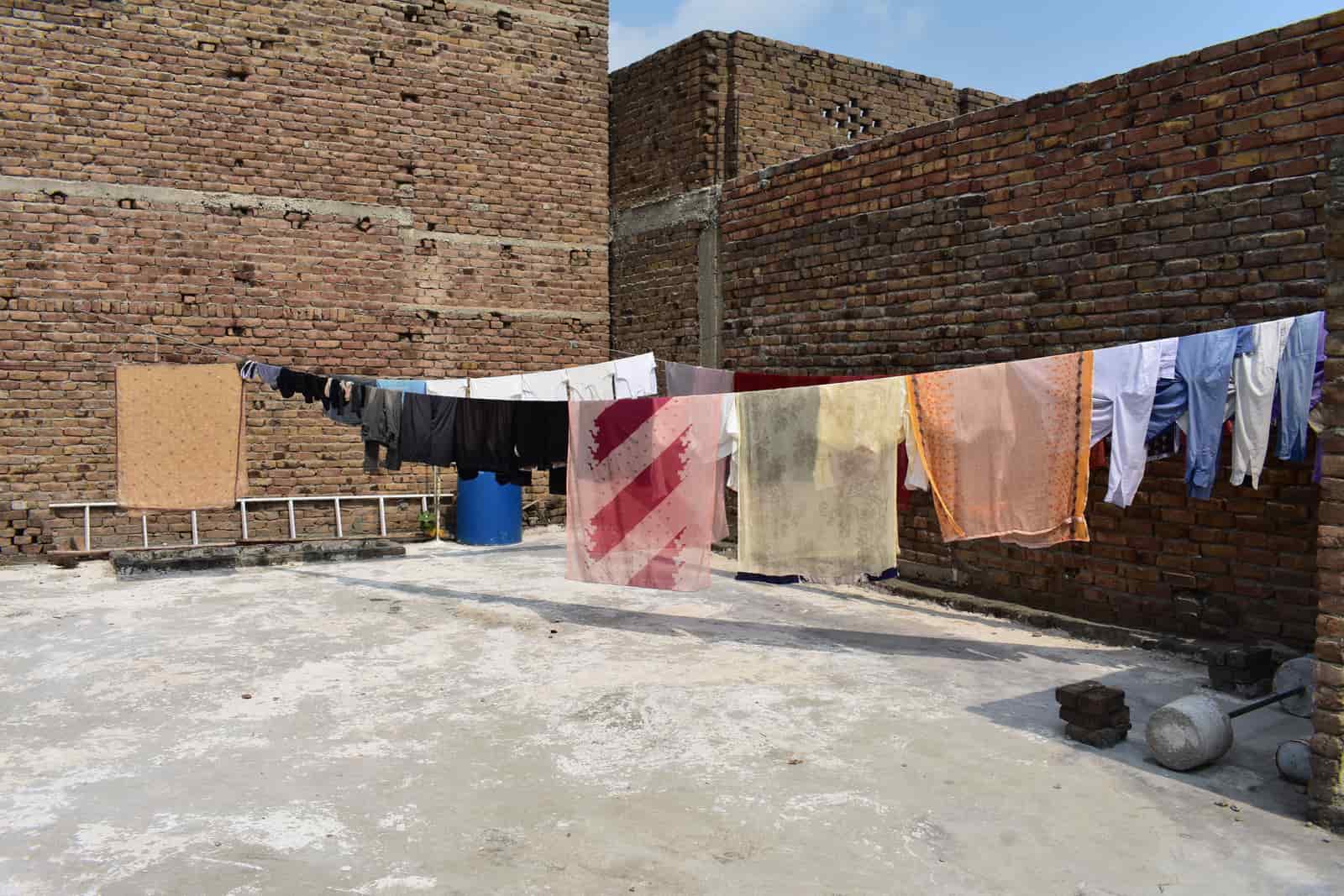
Drying clothes indoors vs outdoors
Speed, running cost, fabric effects and where the moisture ends up, compared for indoor and outdoor drying - and how to get indoor closer to outdoor.
Top pick
STORAGE MANIAC Outdoor Umbrella Drying Rack, 12 Lines with 164 Feet
69"D x 69"W x 87.2"H
#ad · how this is funded · price as of October 16, 2026
How to air-dry clothes without wrinkles
Why air-dried laundry creases, and the six steps - all of them free - that get most of a load off the rack needing no iron.
Top pick
Seropy Clothes Hanger with 10 Clips, 6-Pack
16"L per hanger
#ad · how this is funded · price as of October 16, 2026
Dryer sheet alternatives for air-drying
What dryer sheets actually do, why the problems they fix barely occur when you air-dry, and the two that do - with fixes that cost nothing.
Tumble dryer alternatives
Every practical alternative to a vented tumble dryer, compared on cost per load, time and installation requirements.
Top pick
Honey-Can-Do Heavy-Duty Gullwing Clothes Drying Rack, 50 lb
56.89"D x 23.82"W x 37.8"H
#ad · how this is funded · price as of October 16, 2026
Air drying vs tumble drying
The honest comparison: cost, time, fabric wear and room humidity, with the trade-offs named rather than one side declared best.
Top pick
Honey-Can-Do Heavy-Duty Gullwing Clothes Drying Rack, 50 lb
56.89"D x 23.82"W x 37.8"H
#ad · how this is funded · price as of October 16, 2026
Are drying racks worth it?
The break-even on a drying rack against a tumble dryer and against a laundromat, with the time, space and humidity costs stated honestly.
Top pick
Honey-Can-Do 6-Tier Collapsible Steel Clothes Drying Rack, 24 ft
29"D x 14"W x 42"H
#ad · how this is funded · price as of October 16, 2026
Common questions
Can you dry clothes without a dryer?
Yes, and most of the world does. The three things that decide whether it takes six hours or two days are how much water is left after the spin, how much air moves past the fabric, and whether the room can absorb the moisture.
What is the fastest way to dry clothes indoors?
Spin the load a second time, space the garments so they never touch, and put a fan under the rack angled upward. Together those roughly halve drying time and cost about 15 cents in electricity.
Is air-drying better for your clothes than a dryer?
Generally yes. Dryer lint is worn-off fabric, and the heat is harder on elastic and synthetics. The trade is stiffness, which comes from the lack of mechanical agitation while drying.
Sources
Read next
How to dry clothes without a dryer
The complete start-to-finish method for drying laundry indoors with no machine, including what it costs and how long it takes.
How long does it take clothes to air dry?
A reference table of indoor drying times by garment and by room condition, with the assumptions behind every figure stated.
How to dry clothes faster indoors
Every lever on indoor drying speed, ranked by time saved and priced per load, from the free habits to the appliances.
How to air-dry clothes inside without the smell
Why indoor-dried laundry goes musty, the four things that prevent it, and how to rescue clothes that already smell.
Drying clothes indoors, humidity and condensation
Where the water from indoor drying actually goes, what humidity level to aim for, and how to avoid the condensation that follows.
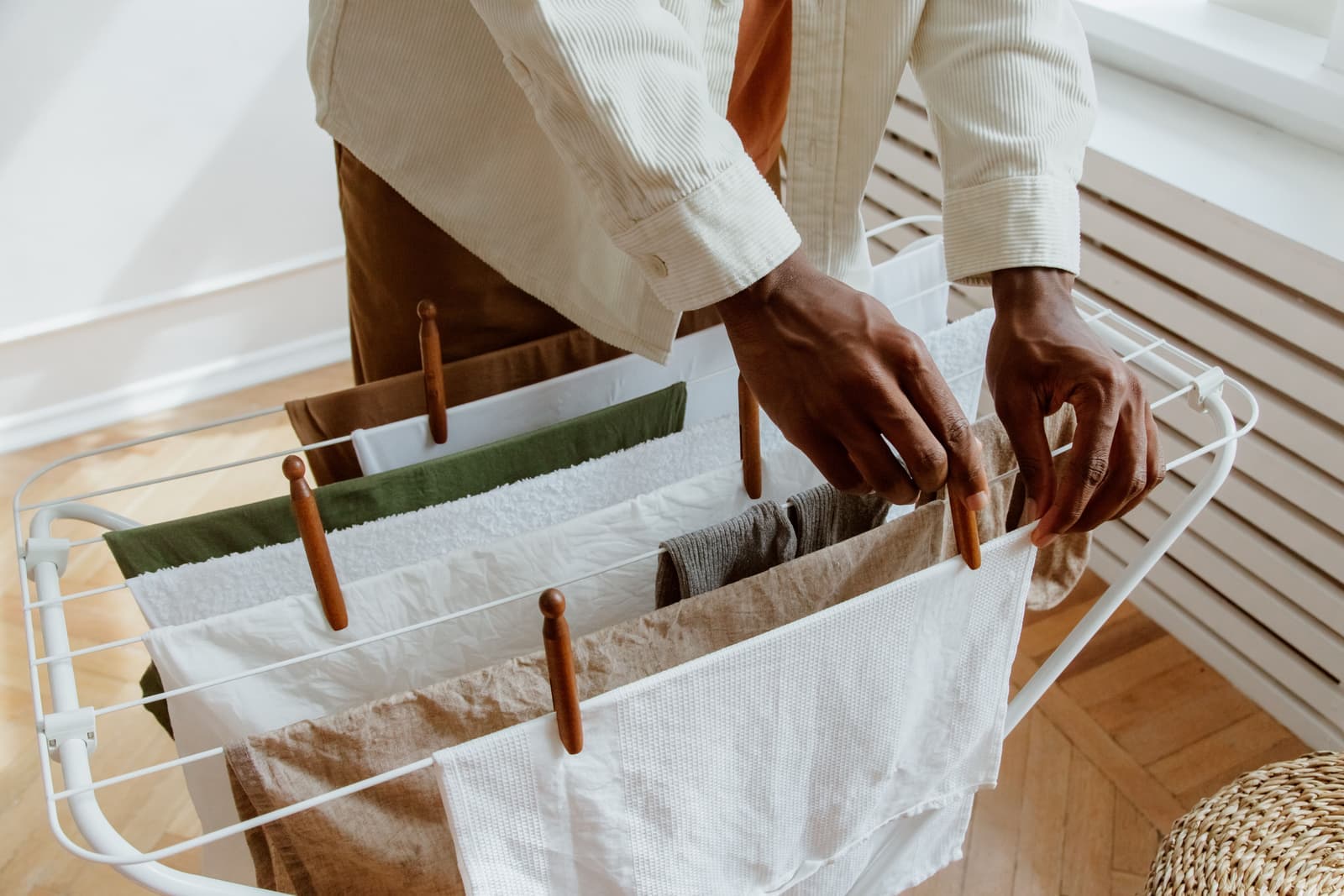
The best clothes drying racks for an apartment
Six standing racks ranked on published specs rather than adjectives, with the one we would not buy named and explained.