Drying clothes indoors vs outdoors
Outdoors wins on almost every measure. The interesting question is what to do on the days it is not available.
We have not tested these products and we do not pretend to have. Here is what we did instead. Links to Amazon earn us a commission at no extra cost to you - disclosure.
| # | Rack | Best for | Open footprint | Price |
|---|---|---|---|---|
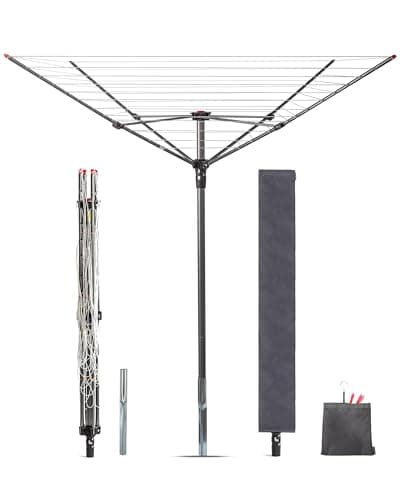
| 1 | 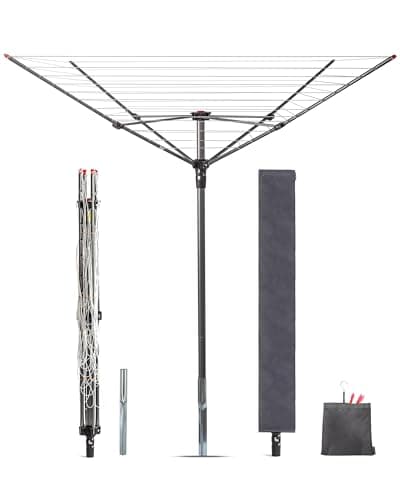 STORAGE MANIAC Outdoor Umbrella Drying Rack, 12 Lines with 164 FeetTop pick164 feet of line on a rotating frame, shipped with a ground spike, a rain cover, a peg bag and 36 pegs. More drying line than every indoor rack on this site combined. | Whole-household outdoor drying | 69"D x 69"W x 87.2"H | |
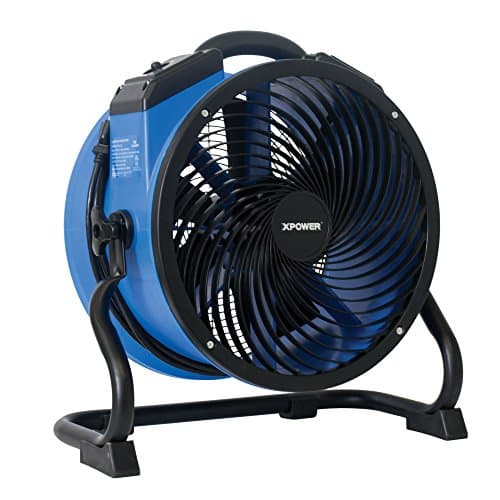
| 2 | 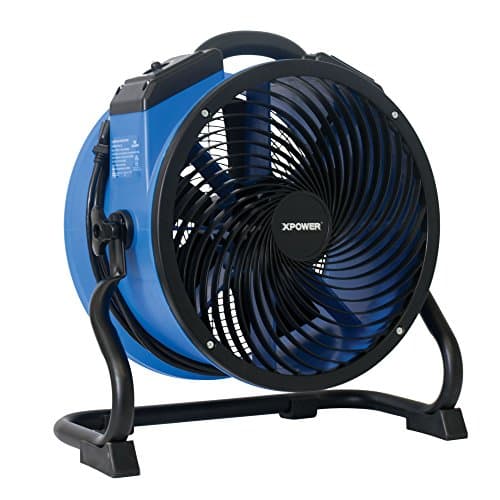 XPOWER FC-300 Air Mover / Whole Room Air Circulator2100 cfm on a published 100 W. That is more than seven times the airflow of a typical utility fan for the same power draw, and airflow is what dries laundry. | The fastest air over a rack | 18.6"D x 19.2"W x 9.4"H | |
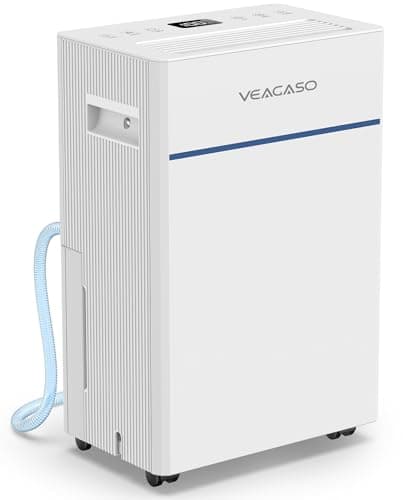
| 3 | 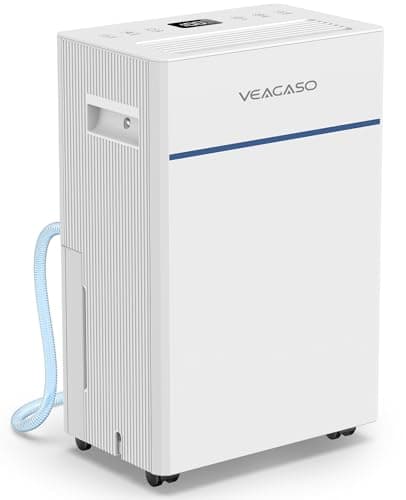 VEAGASO Dehumidifier, 28 Pints, 2000 Sq Ft28 pints a day on a published 158 W draw - the best pints-per-watt figure here, and quiet enough at 38 dB to run in a bedroom. | Drying a load overnight | 10.6"D x 6.7"W x 15.9"H |
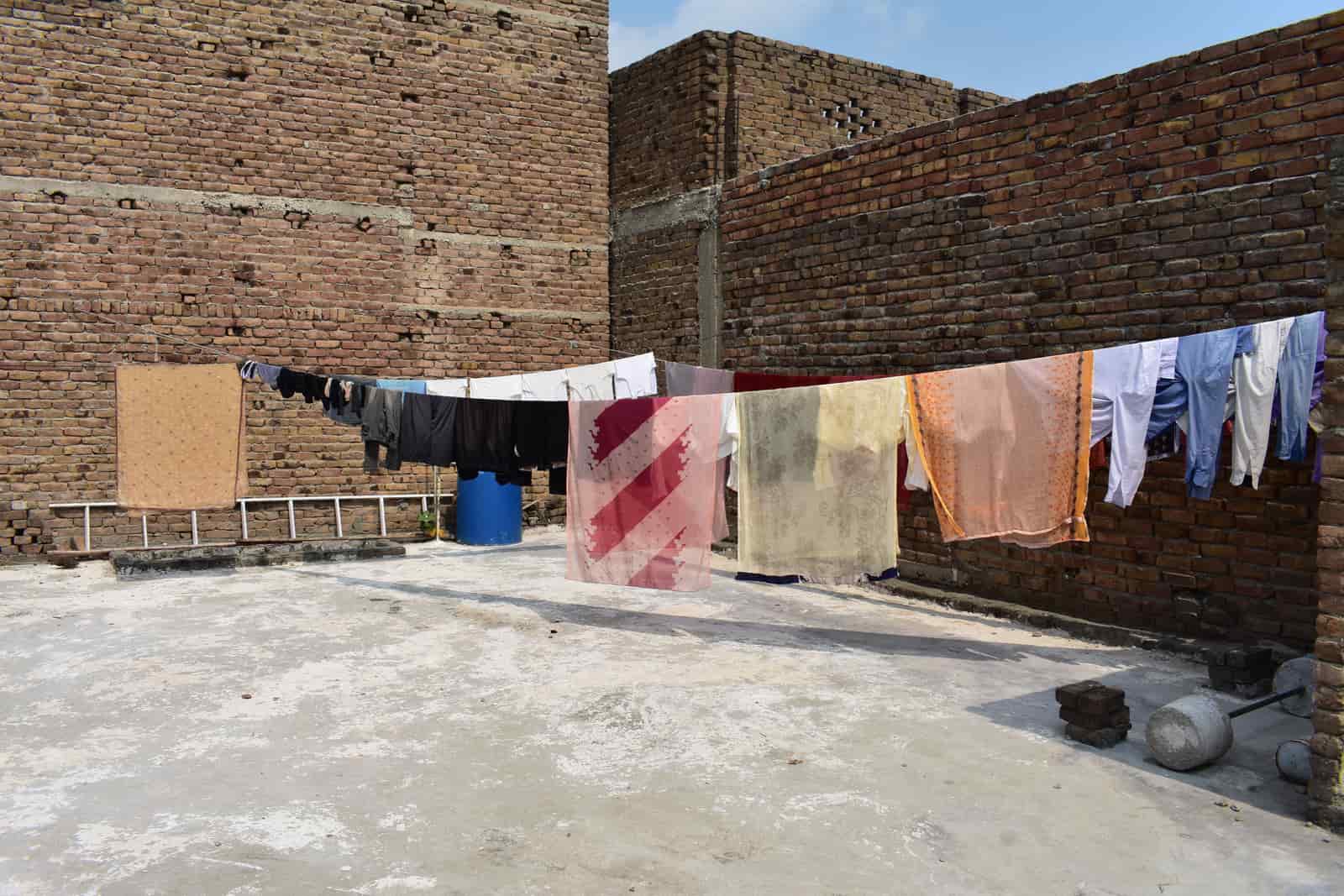
This gets discussed as a preference. It is closer to a constraint: if you have outdoor space and the weather is dry, outdoors is better on nearly every axis and it is not close. What makes the comparison worth writing is that most people cannot use it most of the time.
The comparison
| Indoors | Outdoors | |
|---|---|---|
| Time, mixed cotton load | 6-30 h depending on the item | 2-6 h on a dry breezy day |
| Running cost | 0¢, or 15-25¢ with a fan or heat | 0¢ |
| Where the moisture goes | Into your room air | Into the sky |
| Available in winter | Yes | Rarely useful |
| Available in rain | Yes | No |
| Whites | Unchanged | Bleached by sunlight, free |
| Colors | Unchanged | Fade with repeated exposure |
| Elastic and synthetics | Unchanged | Degrade with long sun exposure |
| Stiffness | Noticeable | Slightly worse - it dries faster |
| Smell risk | Real if drying takes over a day | Very low |
| Permission needed | No | Often, from a lease or HOA |
Why outdoors is so much faster
Drying is controlled by four things: how much water is left after the spin, air movement, how much moisture the surrounding air can still absorb, and temperature. Outdoors improves three of them simultaneously and for free.
- Air movement is whatever the weather is doing, which on a breezy day is far more than any domestic fan produces.
- Moisture capacity is effectively unlimited. This is the big one. A closed room saturates within about an hour and evaporation nearly stops; the outdoors never does.
- Sunlight warms the fabric well above air temperature, so the water in it evaporates faster.
Indoors you buy those back one at a time, at a cost each: a fan for airflow at about 15 cents a load, a dehumidifier for moisture capacity at about 23 cents, an element for heat at 25 cents and up. That is the whole economic story of this site.
Where indoors actually wins
- Availability. It works in February, at night, and in the rain. Over a year that is most of the loads for most people.
- Color retention. No ultraviolet, so no fading. Dark denim and printed cotton last visibly longer dried inside.
- Elastic life. Sun degrades elastane over repeated exposure, so activewear and swimwear are better indoors or in shade.
- No permission required. Nobody's covenant governs your hallway.
- Nothing blows away, and nothing gets rained on an hour before it was dry.
The cost of indoor drying that nobody mentions
A washer load carries roughly two to five pints of water. Dried outdoors, that goes into the atmosphere. Dried indoors, every drop goes into your home's air, and in a closed house in winter it condenses on the coldest surface available - typically a window reveal or an exterior wall.
The hybrid that most people should actually run
- Dry outside whenever the forecast allows. It is free, fast, and it keeps the moisture out of the house.
- Keep the indoor rack set up anyway. The value of outdoor drying is that it is faster, not that it is reliable.
- Bring things in before dusk. Evening humidity rises and laundry left out overnight can end up damper than it was at 4pm.
- Turn colored items inside out on the line. Free, and it puts the fading on the inside face.
- Keep swimwear and activewear in shade, indoors or out.
- Indoors in winter, add a dehumidifier rather than heat. It solves the drying and the condensation together - see drying clothes in winter.
What to use, either way
Top pick · Whole-household outdoor drying
STORAGE MANIAC Outdoor Umbrella Drying Rack, 12 Lines with 164 Feet
164 feet of line on a rotating frame, shipped with a ground spike, a rain cover, a peg bag and 36 pegs. More drying line than every indoor rack on this site combined.
What the manufacturer publishes
- Open
- 69"D x 69"W x 87.2"H
- Folded
- Folds down on the central pole
- Drying line
- 164 linear feet across 12 lines
- Load capacity
- Not published
- Material
- PVC-coated line on a powder-coated stainless frame
Figures from Manufacturer listing on Amazon, retrieved 2026-09-02.
164 feet is roughly three and a half full washer loads with proper spacing. Nothing indoors comes close, and it is why a yard changes the arithmetic of this entire site.
The rotary format is not a gimmick. Arms that turn let you load from one standing position instead of walking a line, and the spin also keeps garments moving in a breeze rather than pressed against each other.
The included kit is what separates this from cheaper rotary lines: ground spike, protective cover, peg bag and 36 pegs. A rotary line without a cover weathers badly, and the cover is usually the thing people buy separately later.
No load capacity is published. On a rotary line the practical limit is balance and wind rather than the frame.
Good
- 164 linear feet - by far the most on this site
- Ground spike, rain cover, peg bag and 36 pegs included
- 360 degree rotation, loadable from one spot
- Height adjustable on the central pole
Not so good
- Needs ground you can drive a spike into
- Nearly 6 feet across when open
- No published load capacity
Skip this if you have a balcony rather than a yard. A rotary line needs ground, and a railing rack is the balcony answer.
#ad · how this is funded · price as of October 20, 2026
Pick 2 · The fastest air over a rack
XPOWER FC-300 Air Mover / Whole Room Air Circulator
2100 cfm on a published 100 W. That is more than seven times the airflow of a typical utility fan for the same power draw, and airflow is what dries laundry.
What the manufacturer publishes
- Open
- 18.6"D x 19.2"W x 9.4"H
- Folded
- Not applicable
- Drying line
- Not applicable
- Load capacity
- 2100 cfm
- Material
- Housing with high-torque induction motor
- Rated wattage
- 100 W
Costs 1.8¢ an hour to run - 9.2¢ for a 5-hour session, at 18.34¢/kWh (US residential average, June 2026).
Figures from Manufacturer listing on Amazon, retrieved 2026-09-02.
2100 cfm at 100 W is the specification that matters. Air movement is the single biggest lever on indoor drying time, and this delivers the most of it per watt of anything here.
One hundred watts for four hours is about 7 cents at the current US average rate. Running a fan alongside an unheated rack is close to the cheapest intervention available.
The three-hour timer means you can start it when you hang the load and not think about it, which is how it ends up actually getting used.
It is a floor blower, so it is directional. Aim it along the length of the rack, not at one garment.
Good
- 2100 cfm - by far the most airflow here
- 100 W published
- 3-hour timer
- Four speeds
Not so good
- Loud at full speed - this is shop equipment
- 13 lb and 18 inches across
- Directional, so placement matters
Skip this if the rack is in a bedroom you sleep in. A 2100 cfm air mover is not a quiet appliance.
#ad · how this is funded · price as of October 20, 2026
Pick 3 · Drying a load overnight
VEAGASO Dehumidifier, 28 Pints, 2000 Sq Ft
28 pints a day on a published 158 W draw - the best pints-per-watt figure here, and quiet enough at 38 dB to run in a bedroom.
What the manufacturer publishes
- Open
- 10.6"D x 6.7"W x 15.9"H
- Folded
- Not applicable
- Drying line
- Not applicable
- Load capacity
- 28 pints per day
- Material
- Compressor dehumidifier
- Rated wattage
- 158 W
Costs 2.9¢ an hour to run - 14.5¢ for a 5-hour session, at 18.34¢/kWh (US residential average, June 2026).
Figures from Manufacturer listing on Amazon, retrieved 2026-09-02.
A dehumidifier does not blow air at your laundry; it removes the water your laundry has just put into the room. That is why it dries a closed room full of washing and a fan does not.
158 W is the number to compare against a heated rack. Running it for eight hours costs about 23 cents at the current US average rate - roughly what a 270 W heated rack costs for five.
38 dB is quiet enough to sleep through, which matters because the natural way to use one is overnight in a closed room with the rack.
This is a compressor unit, not a thermoelectric one, which is why it can pull 28 pints where the small desktop units manage a fraction of that.
Good
- 158 W published - the running cost is calculable
- 28 pints per day
- 38 dB quiet mode
- 16.5 lb, portable between rooms
Not so good
- 35.3 cfm airflow is modest, so it works best in a closed room
- Compressor units lose capacity in a cold room
- Tank needs emptying or a hose run
Skip this if your drying room is under about 60 F. Compressor dehumidifiers slow down badly in the cold - that is a physics limit, not a brand problem.
#ad · how this is funded · price as of October 20, 2026
Common questions
Is it better to dry clothes indoors or outdoors?
Outdoors, on almost every measure - it is faster, costs nothing, and keeps the moisture out of your home. Indoors wins on availability, color retention and elastic life, and it is what most people use most of the year.
How much faster do clothes dry outside?
A mixed cotton load that takes 6 to 30 hours indoors depending on the item can be done in 2 to 6 hours on a dry breezy day, because airflow, moisture capacity and temperature all improve at once.
Is drying clothes outside bad for them?
Sunlight fades colors and degrades elastic over repeated exposure, so turn colored items inside out and dry activewear in shade. On whites the same ultraviolet is a free bleaching effect.
Can you dry clothes outside in winter?
Sometimes. On a cold dry breezy day it works well. On a cold still humid day the outdoor air is near saturation and laundry will barely change in eight hours - a warm room with a fan is better.
Does drying clothes indoors cause damp?
It puts two to five pints of water per load into your home's air. In a ventilated room that disperses; in a closed house in winter it condenses on cold surfaces, which over time is a mold risk.
Sources
- U.S. Environmental Protection Agency - Mold Course, moisture and indoor relative humidity - retrieved 2026-09-02
- U.S. Environmental Protection Agency - A Brief Guide to Mold, Moisture and Your Home - retrieved 2026-09-02
- U.S. Energy Information Administration - Electric Power Monthly, Table 5.3 (average residential price of electricity) - retrieved 2026-09-02
- Manufacturer listing on Amazon - retrieved 2026-09-02
Read next
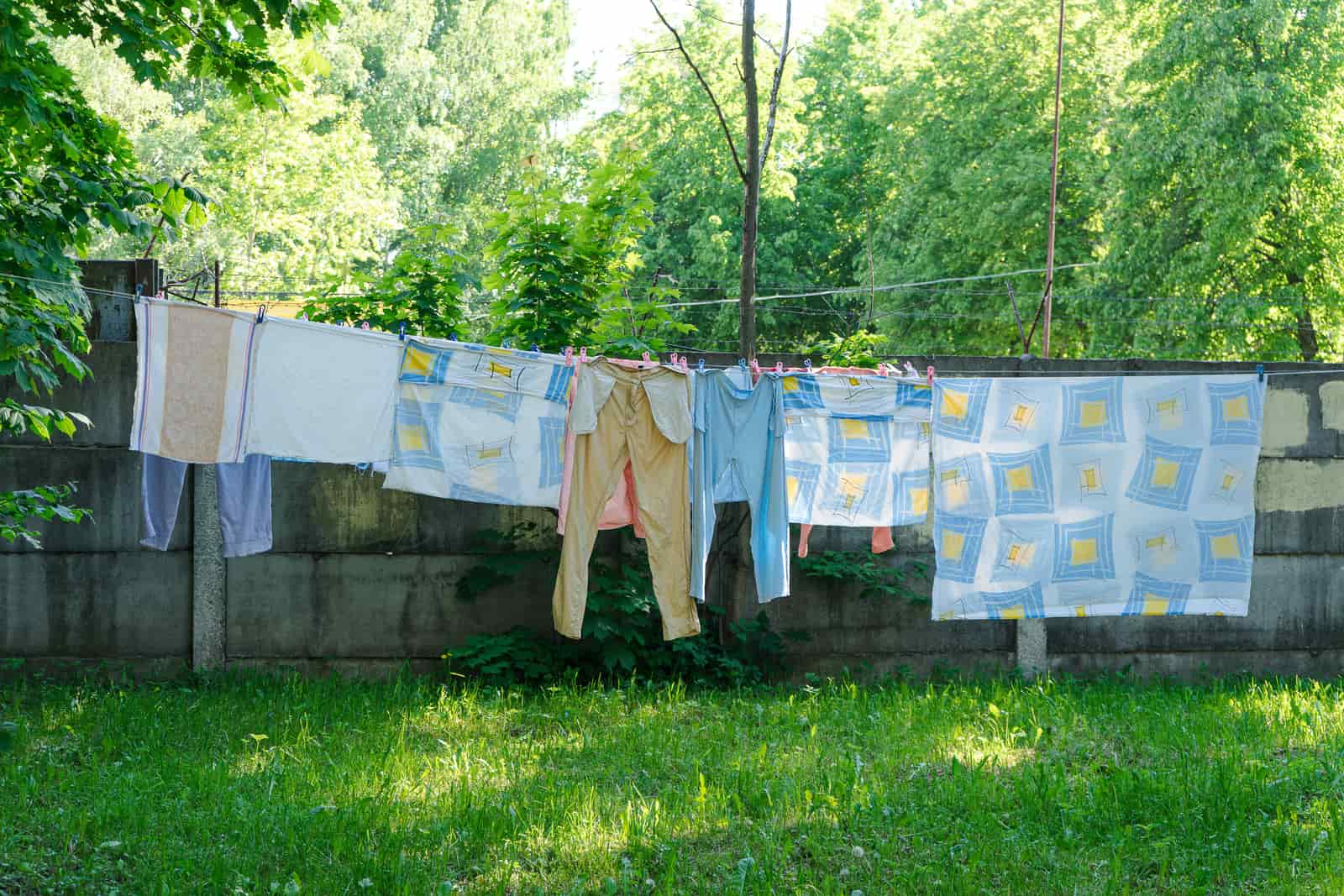
The best outdoor drying racks
Outdoor racks and rotary lines compared on line length, published rating and how they survive weather - plus what sunlight actually does to fabric.

Drying clothes indoors, humidity and condensation
Where the water from indoor drying actually goes, what humidity level to aim for, and how to avoid the condensation that follows.

How to dry clothes indoors in winter
Why indoor drying stalls in winter, what to change, and how to avoid the condensation that comes with a closed-up home.

Air drying vs tumble drying
The honest comparison: cost, time, fabric wear and room humidity, with the trade-offs named rather than one side declared best.
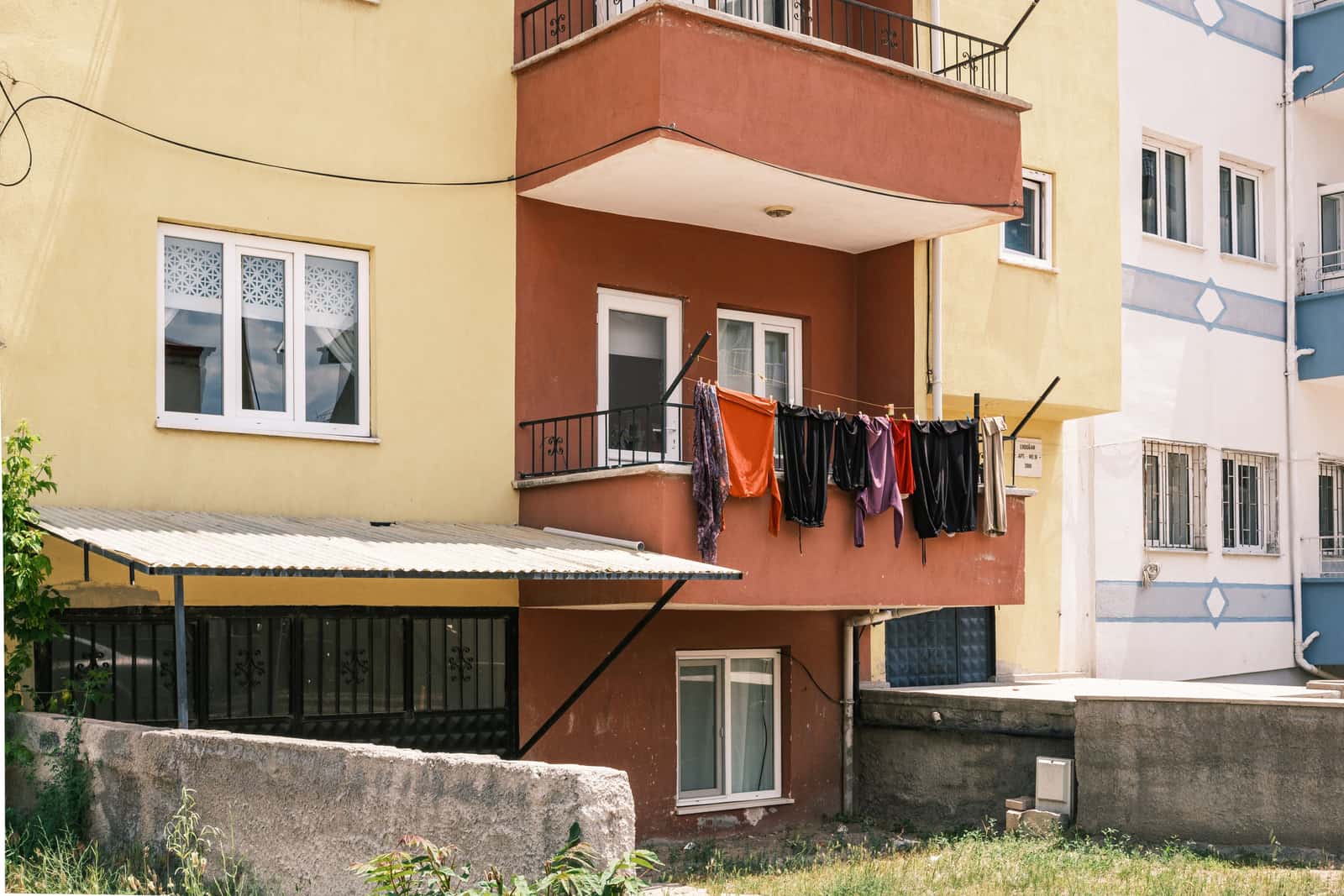
The best balcony drying racks
Railing racks that hook over a balcony rail or windowsill with zero installation, plus the lease rules to check first.
How to dry clothes faster indoors
Every lever on indoor drying speed, ranked by time saved and priced per load, from the free habits to the appliances.