The best fans for drying clothes
The best value purchase on this entire site: roughly half the drying time for about fifteen cents a load.
We have not tested these products and we do not pretend to have. Here is what we did instead. Links to Amazon earn us a commission at no extra cost to you - disclosure.
| # | Rack | Best for | Open footprint | Price |
|---|---|---|---|---|
| 1 | 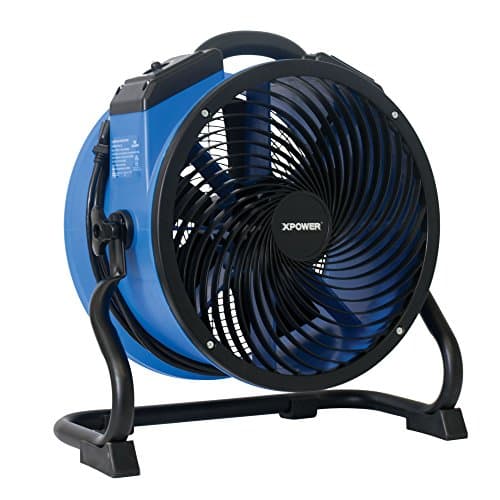 XPOWER FC-300 Air Mover / Whole Room Air CirculatorTop pick2100 cfm on a published 100 W. That is more than seven times the airflow of a typical utility fan for the same power draw, and airflow is what dries laundry. | The fastest air over a rack | 18.6"D x 19.2"W x 9.4"H | |
| 2 | 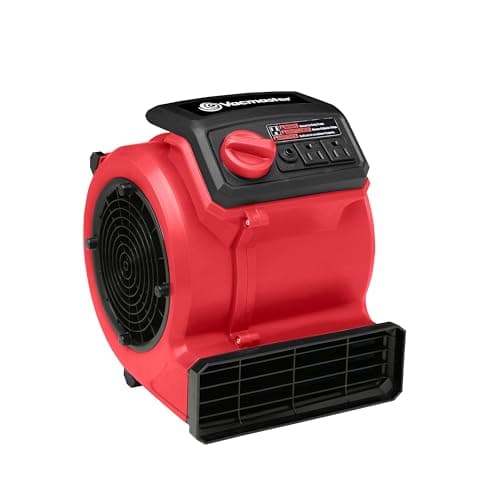 Vacmaster AM201 Air Mover and Fitness Fan, 550 CFM550 cfm at a published 45 dB. Less air than the XPOWER, but quiet enough to leave running overnight in a room you are in. | Airflow you can sleep near | 13.06"D x 10.53"W x 12.67"H | |
| 3 | 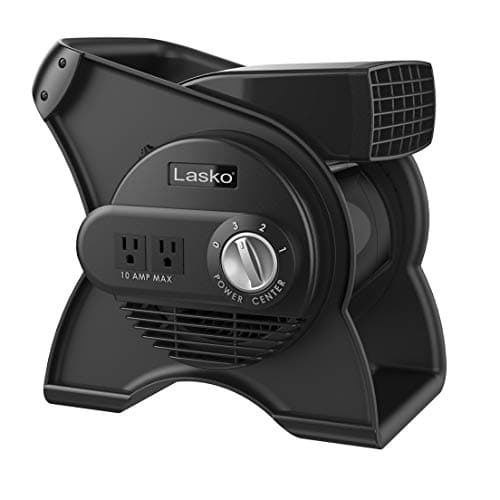 Lasko Pivoting High Velocity Utility Fan, 12"289 cfm at 100 W with a 270 degree pivot. Not a specialist drying fan, but it is the general-purpose one most apartments should own anyway. | A fan you already half-own | 12.2"D x 9.6"W x 12.3"H |
Air movement is the biggest lever on indoor drying that you can buy, and it is by far the cheapest. Evaporation stalls because a saturated layer of air sits against the fabric; a fan strips that layer away and replaces it, continuously.
The specification to compare is cfm per watt
Airflow in cubic feet per minute is what does the drying. Watts is what you pay. The ratio between them varies enormously between a purpose-built air mover and an ordinary fan, and it is the whole reason air movers exist.
| Fan | Published cfm | Published watts | cfm per watt | Noise |
|---|---|---|---|---|
| XPOWER FC-300 | 2,100 | 100 | 21.0 | Loud |
| Vacmaster AM201 | 550 | 223.6 | 2.5 | 45 dB |
| Lasko U12104 | 289 | 100 | 2.9 | 59.3 dB |
That is not a small gap. The air mover delivers seven times the airflow of the Lasko for the same 100 W, because a housed high-torque induction motor with a spiral grille is a fundamentally more efficient way to move air than an open-bladed fan.
What a fan costs to run
| Product | Rated watts | Per hour | Per 5h session | Per month |
|---|---|---|---|---|
| XPOWER FC-300 Air Mover / Whole Room Air Circulator | 100 W | 1.8¢ | 9.2¢ | $1.19 |
| Vacmaster AM201 Air Mover and Fitness Fan, 550 CFM | 223.6 W | 4.1¢ | 20.5¢ | $2.67 |
| Lasko Pivoting High Velocity Utility Fan, 12" | 100 W | 1.8¢ | 9.2¢ | $1.19 |
Monthly figures assume 3 sessions a week at 5 hours each. Rate: 18.34¢/kWh, US residential average for June 2026, from the U.S. Energy Information Administration, Electric Power Monthly, Table 5.3, retrieved 2026-09-02. Put your own rate in.
Noise is the real trade
The efficient option is the loud one. An air mover is shop equipment - it is designed to dry a flooded carpet, not to sit in a bedroom. If the rack is in a room you sleep in, the quiet 45 dB unit is the answer even though it moves a quarter of the air for twice the watts.
| Where the rack is | Fan to use |
|---|---|
| Bathroom or laundry room, door closed | Air mover - nobody has to hear it |
| Hallway or spare room | Air mover, on a lower speed |
| Living room while you are in it | Quiet 45 dB unit |
| Bedroom overnight | Quiet 45 dB unit |
| Studio - you are always in the room | Quiet unit, or run the air mover while you are out |
Placement matters as much as the fan
- Low and angled up, so air passes through the rack rather than around it.
- At one end, blowing along the rack's length, not at its broad side.
- A foot or two back, so the airflow spreads across the whole rack.
- Use the timer if it has one, so it stops when the laundry does.
A modest fan placed well beats a powerful fan placed badly, comfortably. Full detail is on how to load a drying rack.
The picks
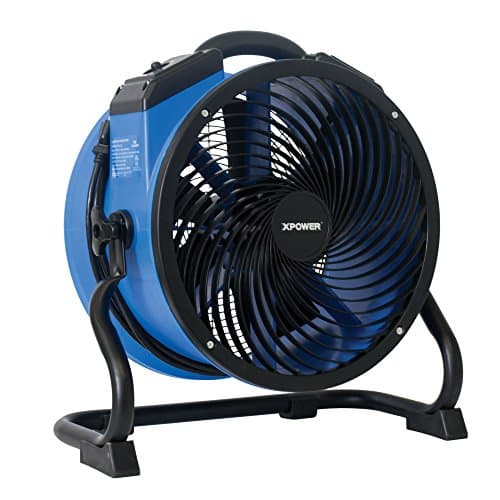
Top pick · The fastest air over a rack
XPOWER FC-300 Air Mover / Whole Room Air Circulator
2100 cfm on a published 100 W. That is more than seven times the airflow of a typical utility fan for the same power draw, and airflow is what dries laundry.
What the manufacturer publishes
- Open
- 18.6"D x 19.2"W x 9.4"H
- Folded
- Not applicable
- Drying line
- Not applicable
- Load capacity
- 2100 cfm
- Material
- Housing with high-torque induction motor
- Rated wattage
- 100 W
Costs 1.8¢ an hour to run - 9.2¢ for a 5-hour session, at 18.34¢/kWh (US residential average, June 2026).
Figures from Manufacturer listing on Amazon, retrieved 2026-09-02.
2100 cfm at 100 W is the specification that matters. Air movement is the single biggest lever on indoor drying time, and this delivers the most of it per watt of anything here.
One hundred watts for four hours is about 7 cents at the current US average rate. Running a fan alongside an unheated rack is close to the cheapest intervention available.
The three-hour timer means you can start it when you hang the load and not think about it, which is how it ends up actually getting used.
It is a floor blower, so it is directional. Aim it along the length of the rack, not at one garment.
Good
- 2100 cfm - by far the most airflow here
- 100 W published
- 3-hour timer
- Four speeds
Not so good
- Loud at full speed - this is shop equipment
- 13 lb and 18 inches across
- Directional, so placement matters
Skip this if the rack is in a bedroom you sleep in. A 2100 cfm air mover is not a quiet appliance.
#ad · how this is funded · price as of October 16, 2026
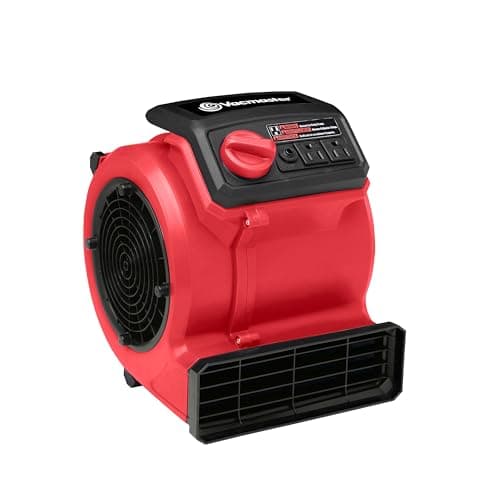
Pick 2 · Airflow you can sleep near
Vacmaster AM201 Air Mover and Fitness Fan, 550 CFM
550 cfm at a published 45 dB. Less air than the XPOWER, but quiet enough to leave running overnight in a room you are in.
What the manufacturer publishes
- Open
- 13.06"D x 10.53"W x 12.67"H
- Folded
- Not applicable
- Drying line
- Not applicable
- Load capacity
- 550 cfm
- Material
- Housing with three-speed motor
- Rated wattage
- 223.6 W
Costs 4.1¢ an hour to run - 20.5¢ for a 5-hour session, at 18.34¢/kWh (US residential average, June 2026).
Figures from Manufacturer listing on Amazon, retrieved 2026-09-02.
45 dB is roughly a quiet refrigerator. That is the specification that makes this an overnight option and the XPOWER not.
The trade is real: 550 cfm against 2100, and 223.6 W against 100. It is both quieter and less efficient per unit of air.
Three positions let you angle it upward under a rack, which is more useful for drying than blowing horizontally at one side of it.
Good
- 45 dB - quiet enough to run overnight
- Three angle positions for directing air under a rack
- 550 cfm
- Stackable receptacles for chaining units
Not so good
- 223.6 W for a quarter of the XPOWER's airflow
- Less air movement means longer drying
- 9 lb
Skip this if the rack is in a room nobody sleeps in. Buy the airflow instead - the XPOWER dries faster for half the watts.
#ad · how this is funded · price as of October 16, 2026
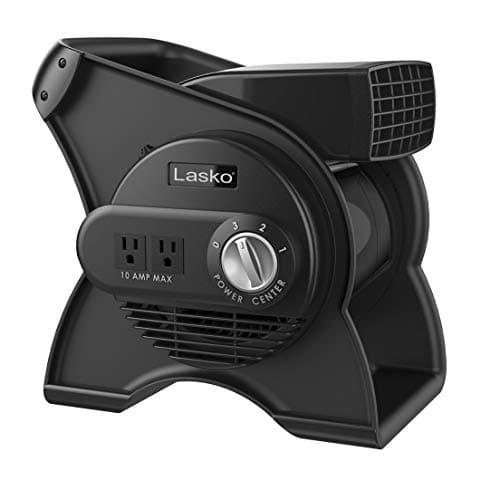
Pick 3 · A fan you already half-own
Lasko Pivoting High Velocity Utility Fan, 12"
289 cfm at 100 W with a 270 degree pivot. Not a specialist drying fan, but it is the general-purpose one most apartments should own anyway.
What the manufacturer publishes
- Open
- 12.2"D x 9.6"W x 12.3"H
- Folded
- Not applicable
- Drying line
- Not applicable
- Load capacity
- 289 cfm
- Material
- Housing with grounded outlets
- Rated wattage
- 100 W
Costs 1.8¢ an hour to run - 9.2¢ for a 5-hour session, at 18.34¢/kWh (US residential average, June 2026).
Figures from Manufacturer listing on Amazon, retrieved 2026-09-02.
289 cfm is a seventh of the XPOWER's airflow at the same 100 W, which tells you how much of an air mover's design is about efficiency rather than raw power.
The 270 degree pivot is the useful part for drying: point it up into a rack from below and the air goes through the garments rather than across them.
At 59.3 dB it sits between the air mover and the quiet Vacmaster. Tolerable in a living room, borderline in a bedroom.
Good
- 100 W published
- 270 degree pivot aims air up into a rack
- Two grounded pass-through outlets
- Useful year-round, not just on laundry day
Not so good
- 289 cfm - far less air than a purpose-built air mover
- 59.3 dB
- 7.5 lb
Skip this if drying speed is the only reason you are buying a fan. Buy the air mover instead.
#ad · how this is funded · price as of October 16, 2026
A fan matters more for technical fabric than for cotton, because gym kit already dries quickly and the failure is the smell rather than the time. That case is made in full on drying racks for activewear.
Common questions
Does a fan help clothes dry faster?
Substantially - roughly halving drying time in most rooms. It works by removing the saturated layer of air sitting against the fabric and replacing it with drier air.
What kind of fan is best for drying clothes?
An air mover, if noise is not a problem. They deliver several times the airflow per watt of an ordinary fan - 2100 cfm at 100 W against 289 cfm at the same wattage for a typical utility fan.
Where should you put a fan to dry clothes?
Low, at one end of the rack, angled upward so air passes through the garments rather than around them. Placement matters as much as the fan.
How much does it cost to run a fan to dry clothes?
About 15 cents for an eight-hour run at 100 W, at the June 2026 US average of 18.34 cents per kilowatt-hour. That is a third of what the same load costs in an electric tumble dryer.
Sources
- Manufacturer listing on Amazon - retrieved 2026-09-02
- Manufacturer listing on Amazon - retrieved 2026-09-02
- U.S. Energy Information Administration - Electric Power Monthly, Table 5.3 (average residential price of electricity) - retrieved 2026-09-02
Read next
Dehumidifier vs fan for drying clothes
Running cost, mechanism and the room condition that decides which of the two is the right purchase.
How to dry clothes faster indoors
Every lever on indoor drying speed, ranked by time saved and priced per load, from the free habits to the appliances.
How long does it take clothes to air dry?
A reference table of indoor drying times by garment and by room condition, with the assumptions behind every figure stated.
How to load a drying rack so clothes dry faster
Spacing, orientation and loading order - the free technique that changes indoor drying time more than any upgrade.
The best dehumidifiers for drying clothes
Four dehumidifiers ranked on published extraction, wattage and airflow, with cost per drying session computed.