How to load a drying rack so clothes dry faster
The same rack, the same room and the same load can take four hours or ten. Loading is most of that difference.
We have not tested these products and we do not pretend to have. Here is what we did instead. Links to Amazon earn us a commission at no extra cost to you - disclosure.
| # | Rack | Best for | Open footprint | Price |
|---|---|---|---|---|
| 1 | 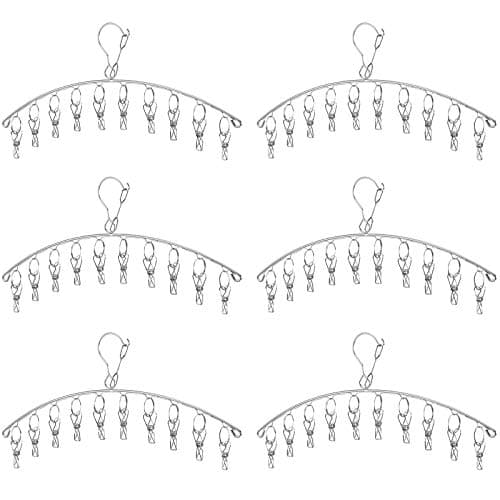 Seropy Clothes Hanger with 10 Clips, 6-PackTop pickSix stainless hangers, 60 clips total, on 4 mm wire with a locking windproof hook. The thing that stops small items eating a whole rack. | Socks and underwear | 16"L per hanger | |
| 2 | 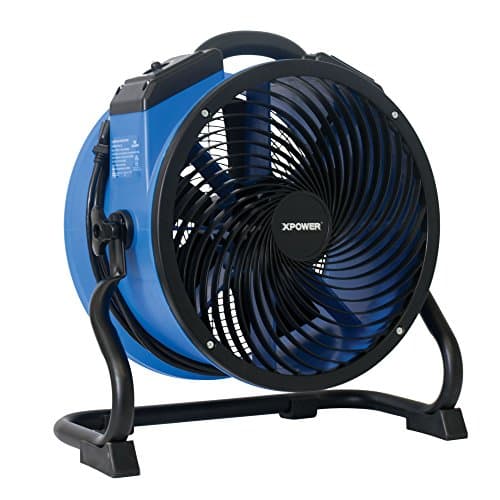 XPOWER FC-300 Air Mover / Whole Room Air Circulator2100 cfm on a published 100 W. That is more than seven times the airflow of a typical utility fan for the same power draw, and airflow is what dries laundry. | The fastest air over a rack | 18.6"D x 19.2"W x 9.4"H |
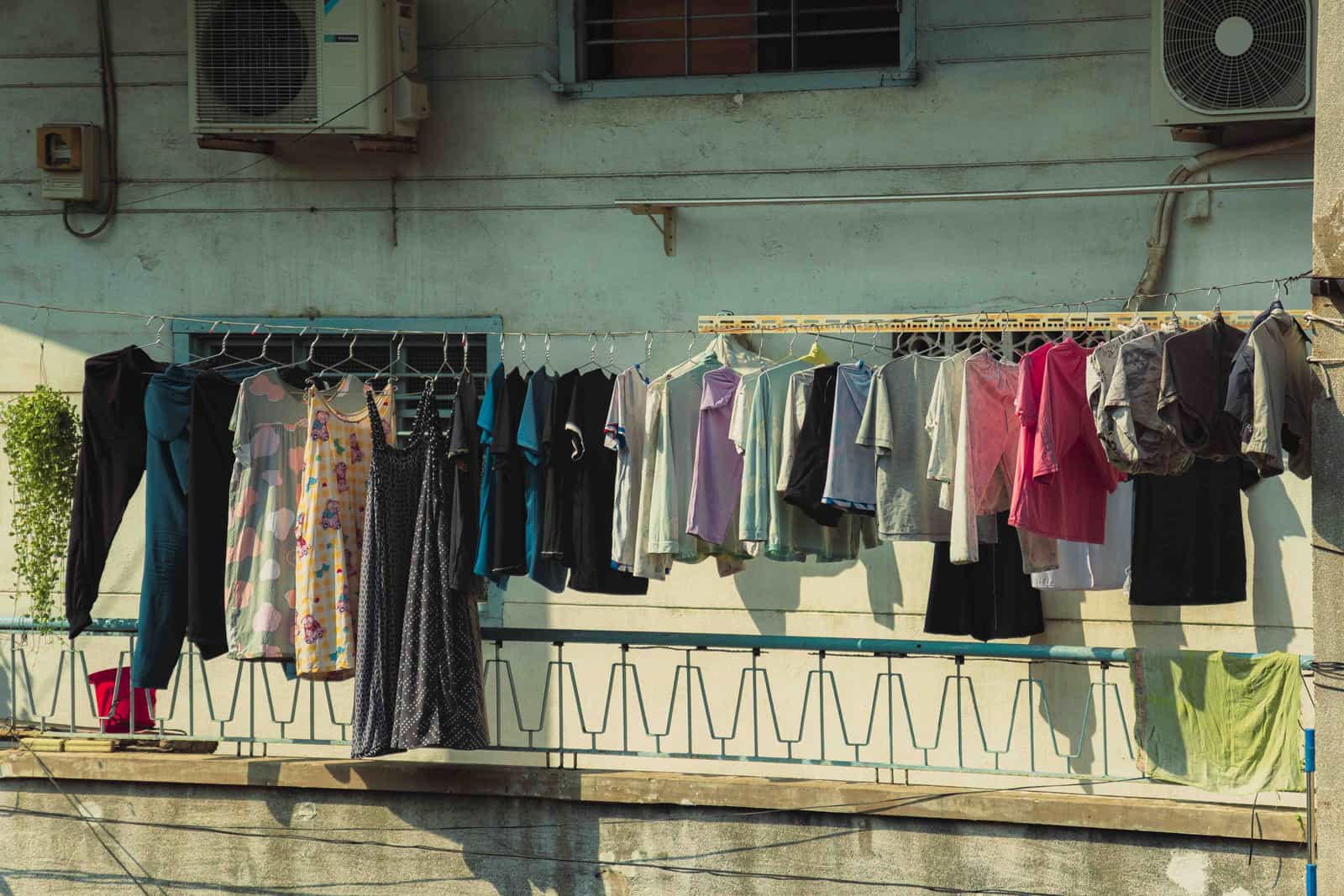
Drying is evaporation from a surface into moving air. Everything below follows from that one sentence: maximize exposed surface, and put the surfaces where the air actually is.
The five rules
- Never let two wet items touch. Where fabric meets fabric neither face is exposed and the contact patch stays wet for hours after everything else is dry. This is the single biggest factor.
- Heavy items on the outside. The outer bars of any rack see the most air movement. Towels and jeans hold the most water and need it most; socks do not.
- Hang along the airflow, not across it. If a window or a fan is moving air in one direction, garments hung parallel to it present two faces to moving air rather than one face and a wind shadow.
- Get small items off the bars. Socks and underwear consume bar length out of all proportion to their bulk. Clip hangers move them into vertical space that was otherwise empty.
- Turn thick items once. Jeans and towels dry from the outside in. Flipping them halfway through is the difference between damp seams and finished laundry.
Loading order
| Position | What goes there | Why |
|---|---|---|
| Outer bars | Towels, jeans, heavy cotton | Most airflow, most water to lose |
| Middle bars | Shirts, t-shirts, light cotton | Moderate airflow, moderate load |
| Top bar | Long items - dresses, trousers | Clears the floor |
| Clip hangers, hung off | Socks, underwear, bras | Frees bar length for bulky items |
| Flat mesh, separately | Knitwear and wool | Must not hang at all |
The mistakes that cost hours
- Folding a towel in half over a bar. That halves the exposed surface and traps the fold. Hang it at full length even if it uses two bars' worth of space - the same mistake applies to jeans, and drying racks for jeans and towels covers both.
- Filling the rack because the rack is there. Two thirds full and dry in five hours beats full and damp in twelve.
- Putting the rack against a wall. One entire side of the rack is then in still air. Twelve inches of clearance is enough to fix it.
- Drying with the door closed and no ventilation. The air saturates and evaporation slows to nearly nothing. See indoor humidity and condensation.
The two things worth buying
Top pick · Socks and underwear
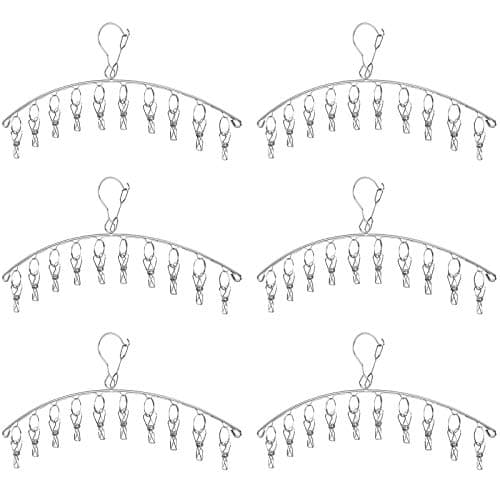
Seropy Clothes Hanger with 10 Clips, 6-Pack
Six stainless hangers, 60 clips total, on 4 mm wire with a locking windproof hook. The thing that stops small items eating a whole rack.
What the manufacturer publishes
- Open
- 16"L per hanger
- Folded
- Not applicable
- Drying line
- 60 clips across 6 hangers
- Load capacity
- Not published
- Material
- Stainless steel, 4 mm wire
Figures from Manufacturer listing on Amazon, retrieved 2026-09-02.
Small items are what actually fills a rack. Sixty clips move every sock, every pair of underwear and every bra off the rack bars and into vertical space that was empty.
4 mm solid stainless rather than plated wire. Plated clip hangers rust at the clip spring first and then mark the next white shirt you hang on them.
The locking hook matters on a balcony or by an open window, where an unlocked hanger of socks becomes a neighbor's problem.
Good
- 60 clips for the price of one rack accessory
- Solid stainless, no plating to fail
- Locking windproof hook
- Hangs off a rod, a rack or a rail
Not so good
- No published weight rating
- Metal clips can mark very delicate fabrics
Skip this if you hand-wash a lot of fine knitwear. Metal clips leave a mark; a flat mesh dryer does not.
#ad · how this is funded · price as of October 16, 2026
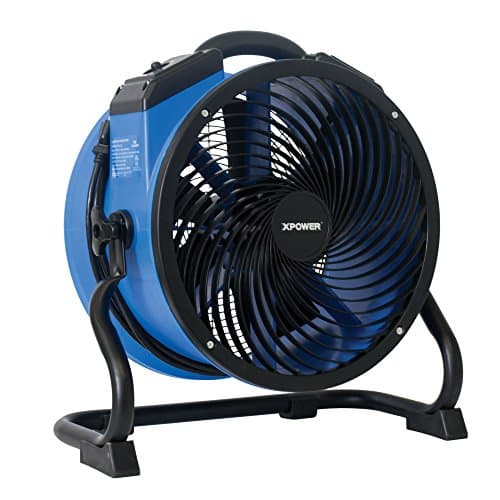
Pick 2 · The fastest air over a rack
XPOWER FC-300 Air Mover / Whole Room Air Circulator
2100 cfm on a published 100 W. That is more than seven times the airflow of a typical utility fan for the same power draw, and airflow is what dries laundry.
What the manufacturer publishes
- Open
- 18.6"D x 19.2"W x 9.4"H
- Folded
- Not applicable
- Drying line
- Not applicable
- Load capacity
- 2100 cfm
- Material
- Housing with high-torque induction motor
- Rated wattage
- 100 W
Costs 1.8¢ an hour to run - 9.2¢ for a 5-hour session, at 18.34¢/kWh (US residential average, June 2026).
Figures from Manufacturer listing on Amazon, retrieved 2026-09-02.
2100 cfm at 100 W is the specification that matters. Air movement is the single biggest lever on indoor drying time, and this delivers the most of it per watt of anything here.
One hundred watts for four hours is about 7 cents at the current US average rate. Running a fan alongside an unheated rack is close to the cheapest intervention available.
The three-hour timer means you can start it when you hang the load and not think about it, which is how it ends up actually getting used.
It is a floor blower, so it is directional. Aim it along the length of the rack, not at one garment.
Good
- 2100 cfm - by far the most airflow here
- 100 W published
- 3-hour timer
- Four speeds
Not so good
- Loud at full speed - this is shop equipment
- 13 lb and 18 inches across
- Directional, so placement matters
Skip this if the rack is in a bedroom you sleep in. A 2100 cfm air mover is not a quiet appliance.
#ad · how this is funded · price as of October 16, 2026
Not everything should go over a bar. Shirts, blouses and dresses dry with fewer creases on a hanger hooked over the rack's wing than folded over a rod - which hangers suit wet fabric is on hangers for drying clothes.
Common questions
Does spacing clothes on a drying rack really matter?
It is the biggest single factor you control. Where two wet garments touch, neither surface is exposed to air, and that contact area stays wet long after the rest of the load is dry.
Should you put a fan on a drying rack?
Yes, and position matters more than power. Place it low and angled up through the rack so air passes both faces of each garment, rather than blowing horizontally at one side.
How do you dry towels on a rack?
Hang them at full length on the outermost bars, never folded over. A folded towel exposes half the surface and traps moisture in the fold.
Do clothes dry faster inside out?
For thick items with seams and pockets, often yes - the inside is where the last damp patches survive. Turning jeans inside out for the second half of drying is worth doing.
Sources
- Manufacturer listing on Amazon - retrieved 2026-09-02
- Manufacturer listing on Amazon - retrieved 2026-09-02
Read next

How to dry clothes faster indoors
Every lever on indoor drying speed, ranked by time saved and priced per load, from the free habits to the appliances.
How long does it take clothes to air dry?
A reference table of indoor drying times by garment and by room condition, with the assumptions behind every figure stated.

How much laundry actually fits on a drying rack
The reference table nobody publishes: how many shirts, towels and pairs of jeans a given number of linear feet actually holds.

The best drying racks for jeans and towels
Denim and terry hold more water than anything else you wash. Six picks ranked on bar height, load rating and rod spacing, plus the one to skip.
The best fans for drying clothes
Three fans compared on airflow per watt and noise level, with running cost per load and where to place one.

The best clip hangers for drying small items
Clip hangers compared on clip count, wire grade and hook design - the few-dollar upgrade that frees up real rack space.