Are towel warmers worth it?
As a luxury, that is your call. As a fix for a towel that never dries between showers, the arithmetic is unusually favorable.
We have not tested these products and we do not pretend to have. Here is what we did instead. Links to Amazon earn us a commission at no extra cost to you - disclosure.
| # | Rack | Best for | Open footprint | Price |
|---|---|---|---|---|
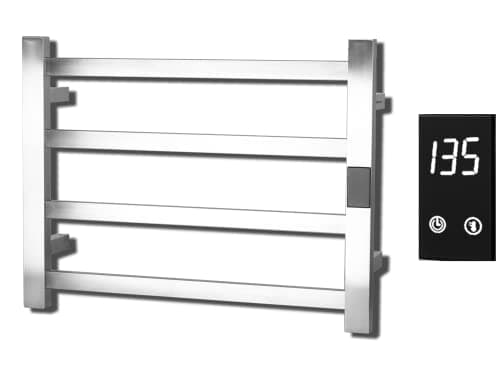
| 1 | 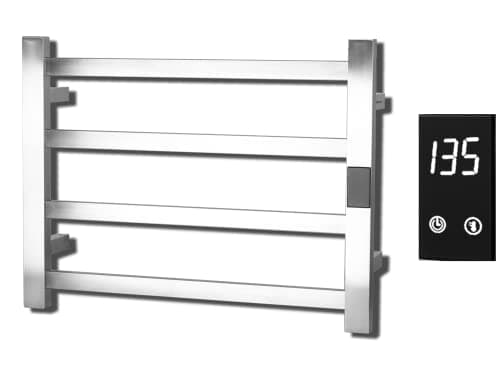 Topdattion Electric Towel Warmer, 4-Bar Super Thin with TimerTop pick75 W published, which is the lowest running cost of any powered drying product on this site - about 1.4 cents an hour - and it is one of only two towel rails here that publishes a wattage at all. | Knowing what it costs | Not published | |
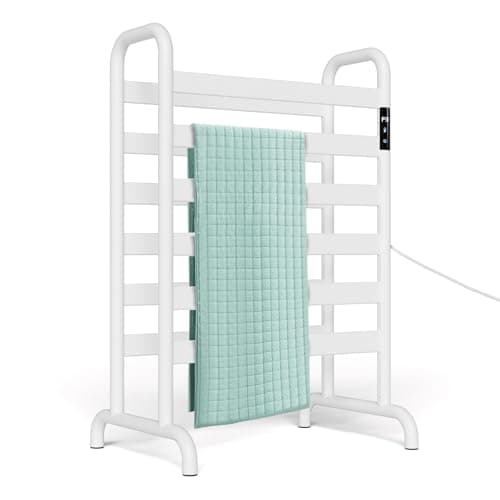
| 2 | 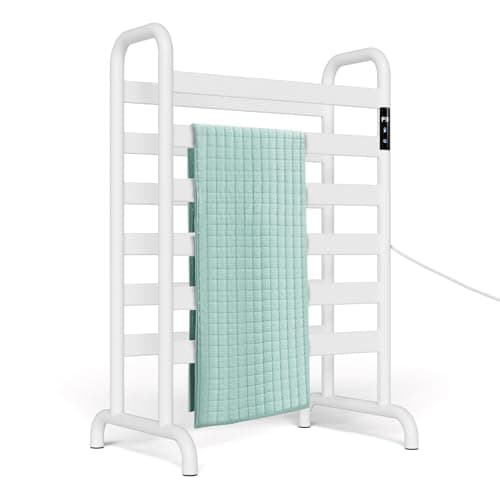 LIIAMOAR Freestanding Heated Towel Rack, 12 Rods, 360 W360 W and twelve rods - double the power of anything else here, and the only one with the output to dry a soaked towel rather than warm a damp one. | Actually drying rather than warming | 35.6"L x 23.6"W | Check price#ad |
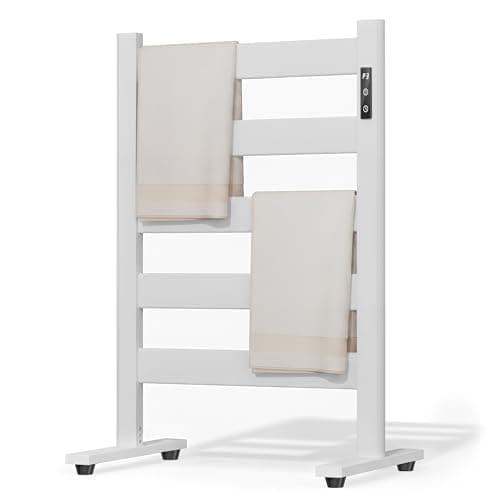
| 3 | 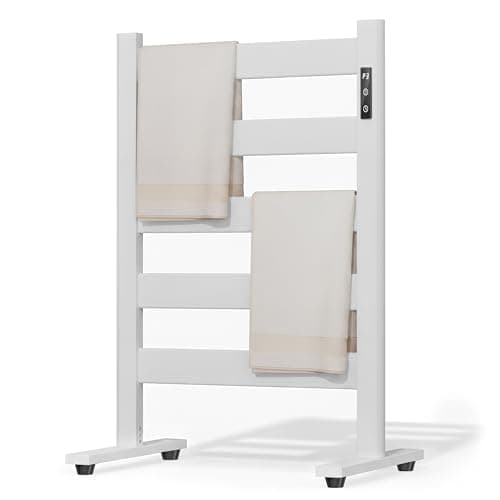 Sawlece Freestanding Towel Warmer, 5-Bar, 180 W180 W published, which works out at about 3.3 cents an hour - and it is the cheaper of two identical racks that differ only in color. | Knowing what it costs to run | 23.78"D x 13.78"W x 35.67"H |
The question behind the question
Almost every answer to this question online treats a towel warmer as a luxury and stops there. That is the wrong frame, because two completely different purchases hide behind the same product name.
One is comfort: a warm dry towel when you step out of the shower. Whether that is worth the money is a question about you, and no arithmetic settles it. The other is a genuine drying problem - a bath towel in a small bathroom that never fully dries between uses, goes musty by midweek and has to be washed twice as often. That one is an engineering question with a number attached, and the number is small.
What one actually costs to run
| Product | Rated watts | Per hour | Per 5h session | Per month |
|---|---|---|---|---|
| Topdattion Electric Towel Warmer, 4-Bar Super Thin with Timer | 75 W | 1.4¢ | 6.9¢ | $0.89 |
| LIIAMOAR Freestanding Heated Towel Rack, 12 Rods, 360 W | 360 W | 6.6¢ | 33¢ | $4.29 |
| Sawlece Freestanding Towel Warmer, 5-Bar, 180 W | 180 W | 3.3¢ | 16.5¢ | $2.15 |
Monthly figures assume 3 sessions a week at 5 hours each. Rate: 18.34¢/kWh, US residential average for June 2026, from the U.S. Energy Information Administration, Electric Power Monthly, Table 5.3, retrieved 2026-09-02. Put your own rate in.
That is the cheapest powered drying product on this site by a wide margin. A heated drying rack draws roughly 270 W and a dehumidifier around 158; the lowest-wattage towel rail here draws 75. The full comparison across every powered product is on what a heated rack costs to run.
Note the spread within the category, though. Published wattages on the warmers this site covers run from 75 W to 360 W - nearly five times - and that ratio is the difference between ten dollars a year and forty-eight. The wattage is not a detail on this purchase; it is the purchase.
Do towel warmers dry towels?
Bar warmers: a damp towel, yes. A wet one, no.
A bar-style warmer - wall rail or freestanding frame - is an open set of heated tubes with room air moving freely between them. Drape a towel that has been used once over it and it will be dry and warm in a couple of hours. That is a real function and it is the one this site cares about.
What it will not do is dry a towel straight out of the washing machine. Four to nine bars is a few feet of contact area against a load that holds a pound or more of water, and none of the listings on this site claims otherwise. For laundry out of a wash you need a rack, and the towel-specific racks are on freestanding towel drying racks.
Within bar warmers, wattage decides how wet an item you can start with. The 360 W unit in the picks below publishes a top temperature of 170°F and will take on a genuinely damp towel; the 75 W rail is a finisher and a warmer, not a dryer.
Bucket warmers: no, by their own instruction
The bucket format is now the most-searched shape in this category, and it is the one shape that cannot do the job this site exists for. A bucket is an insulated sealed container: the lid closes, there is no airflow through it, and the moisture a damp towel gives off has nowhere to go.
| Brand | Published wattage | The instruction in its own listing |
|---|---|---|
| FLYHIT | 450 W | Do not use it to dry wet towels or other damp items |
| SAMEAT | Not published | Do not use it to dry wet towels or other items that are still damp |
| CWDOlROI | Not published | Never place damp or wet items into the warmer |
Two of those three do not publish a wattage at all, so no running cost can be computed for them. The one that does publishes 450 W - the highest figure of any towel product on this site, and six times the lowest - which at two hours a day would be about $60 a year to warm towels that were already dry.
None of that makes buckets bad products. They do the comfort job well and several publish a genuine safety case for it. It makes them the wrong product for anyone whose actual problem is a towel that will not dry, and the listings are honest enough to say so if you read to the end of the bullet.
The published specifications
| Product | Open | Folded | Drying line | Load | Material | Watts |
|---|---|---|---|---|---|---|
| Topdattion Electric Towel Warmer, 4-Bar Super Thin with Timer | Not published | Not applicable - wall mounted | 4 bars (linear feet not published) | Not published | 304 stainless steel, silver brushed finish | 75 W |
| LIIAMOAR Freestanding Heated Towel Rack, 12 Rods, 360 W | 35.6"L x 23.6"W | Not applicable - freestanding | 12 heating rods | Not published | Anodized aviation aluminum alloy | 360 W |
| Sawlece Freestanding Towel Warmer, 5-Bar, 180 W | 23.78"D x 13.78"W x 35.67"H | Not applicable - freestanding | 5 wide flat bars | Not published | Anodized aluminum | 180 W |
Every figure is the manufacturer’s own, read from its listing on 2026-09-02. Where a cell says not published, that specification is genuinely absent - we do not estimate one. How we work.
The case where it pays for itself
Here is the argument nobody makes for these, and it is the strongest one. In a small bathroom with poor ventilation a bath towel used daily never returns to dry. It sits at some middling dampness, and fabric that stays damp in still warm air for more than about a day develops the musty smell this site writes about at length on air-drying without the smell.
The usual response is to wash towels more often. Two extra towel washes a week is two extra machine cycles, and if those towels then go through a dryer it is two extra dryer loads at roughly 46 cents each.
So the honest version: on running cost against avoided dryer cycles, a low-wattage rail is roughly break-even each year and ahead once you count the washing. On purchase price it takes years. If you were buying it for the warm towel anyway, the drying benefit is free; if you are buying it purely as an economy measure, it is not one.
The same arithmetic applied to a heated drying rack - a much bigger purchase with a much bigger claim - is on are heated drying racks worth it.
Can you leave one on all the time?
Most of these publish a timer, an auto shut-off or both, and several state they are designed for continuous operation. At 75 W, running one permanently is 657 kWh a year - about $120 - which is the arithmetic argument for using the timer rather than the switch.
The safety argument is separate and it is not something a listing settles. None of the warmers this site covers publishes a safety certification number, and a heating element in a wet room stays a heating element. The rules worth following before leaving any powered drying product unattended are on safety and overnight use.
So is it worth it?
- Your towel never dries between showers: yes. This is the case the product genuinely solves, and at about ten dollars a year on a 75 W rail it is the cheapest powered fix on this site.
- You want warm towels: your call, and it is cheap. The comfort is real and the energy cost is small. Nobody needs arithmetic to decide this one.
- You want to dry laundry: no. Buy a rack. A bar warmer finishes a damp towel; it does not dry a wash.
- You were looking at a bucket for drying: no. Three of the listings tell you not to put damp items in, and a sealed container has no airflow to dry with.
- You have no wall you can drill and no electrician: buy freestanding. The plug-in frames need neither, and they are compared on freestanding towel warmers.
- You want the lowest possible running cost: buy on published wattage alone. The spread in this category is 75 W to 450 W, and half the products publish no figure at all.
What we could not tell you
- Wattage for roughly half the category. Several warmers this site covers publish none, and no running cost can be computed for those at all.
- How long a damp towel actually takes on a given rail. That depends on the towel, the room and the starting dampness, and no manufacturer publishes a test.
- Safety certification numbers. None of the products here publishes one, bar warmers or buckets.
- Noise. Not applicable to most of these, and not published where fans are involved.
- Whether a heated rail shortens towel life. Heat ages fabric, this is gentle heat, and nobody has published a study either way.
- Current prices. Every figure on this page that involves money comes from published wattage and a cited electricity rate. The prices come from the live layer and change daily.
The verdict
The answer depends entirely on which problem you have, and the product name hides that. If you want warm towels, a towel warmer is a small indulgence with a genuinely small running cost - ten dollars a year at the low end - and the arithmetic will not talk you out of it. If you want a towel that stops smelling by Wednesday, it is a targeted fix for a real failure and the cheapest one on this site.
If you want to dry laundry, this is the wrong aisle, and the bucket warmers are the wrong aisle twice over - their own listings say not to put anything damp in them. Buy on published wattage, use the timer, and do not expect a rack.
Top pick · Knowing what it costs
Topdattion Electric Towel Warmer, 4-Bar Super Thin with Timer
75 W published, which is the lowest running cost of any powered drying product on this site - about 1.4 cents an hour - and it is one of only two towel rails here that publishes a wattage at all.
What the manufacturer publishes
- Open
- Not published
- Folded
- Not applicable - wall mounted
- Drying line
- 4 bars (linear feet not published)
- Load capacity
- Not published
- Material
- 304 stainless steel, silver brushed finish
- Rated wattage
- 75 W
Costs 1.4¢ an hour to run - 6.9¢ for a 5-hour session, at 18.34¢/kWh (US residential average, June 2026).
Figures from Manufacturer listing on Amazon, retrieved 2026-09-02.
75 W is the number that makes this worth writing about. It is a quarter of the draw of the cheapest heated drying rack we cover, and roughly what an old-style incandescent bulb used - running it for five hours costs under seven cents at the current US average rate.
That low draw is also its limit. A 4-bar rail warms and finishes towels; it will not dry a washer load, and nothing on its listing claims it will.
The 24-level timer is the feature that matters for running cost. A rail left on permanently costs roughly five times what one on a five-hour schedule costs, and the timer is how you choose which of those you are paying for.
304 stainless with laser-welded joints and no visible seams. In a bathroom - which is where all of these live - 304 is the grade that does not pit.
Good
- Publishes a rated wattage, which most of this category does not
- 75 W - the cheapest powered drying product on this site to run
- 24-level timer and 5 heat levels
- 304 stainless, hardwired or plug-in
Not so good
- Only 4 bars - this finishes towels rather than drying laundry
- No published load capacity or bar length
- Wall mounting is a permanent fixture
Skip this if you want it to dry a load of washing. A towel rail is a finisher and a warmer, not a substitute for a drying rack.
#ad · how this is funded · price as of October 16, 2026
Pick 2 · Actually drying rather than warming
LIIAMOAR Freestanding Heated Towel Rack, 12 Rods, 360 W
360 W and twelve rods - double the power of anything else here, and the only one with the output to dry a soaked towel rather than warm a damp one.
What the manufacturer publishes
- Open
- 35.6"L x 23.6"W
- Folded
- Not applicable - freestanding
- Drying line
- 12 heating rods
- Load capacity
- Not published
- Material
- Anodized aviation aluminum alloy
- Rated wattage
- 360 W
Costs 6.6¢ an hour to run - 33¢ for a 5-hour session, at 18.34¢/kWh (US residential average, June 2026).
Figures from Manufacturer listing on Amazon, retrieved 2026-09-14.
360 W is twice the published output of the Sawlece and it costs twice as much to run - about 6.6 cents an hour against 3.3. That is the trade, stated plainly: this one has the power to drive water out of a wet towel rather than just keep a dry one warm.
Twelve rods across a 35.6 by 23.6 inch frame is the largest heated surface here. Three published temperature bands run to 170°F, and it reaches that in about five minutes.
Anodized aluminum with a claimed threefold improvement in moisture and rust resistance. The anodizing claim is verifiable in the sense that anodized aluminum genuinely does not rust; the threefold figure is the manufacturer's and we have no way to check it.
Good
- 360 W published - the highest output here, and the only one that can dry rather than warm
- Twelve rods on a 35.6 by 23.6 inch frame
- Three temperature bands up to 170°F, reached in about five minutes
- Anodized aluminum with overheat cut-off
Not so good
- About 6.6 cents an hour - double the Sawlece, and the highest running cost on this page
- No published load rating or drying-line figure
- The threefold rust-resistance claim is unverifiable
- Stock has been intermittent
Skip this if you only want warm towels after a shower. You are paying for output you will not use, twice an hour, forever.
Pick 3 · Knowing what it costs to run
Sawlece Freestanding Towel Warmer, 5-Bar, 180 W
180 W published, which works out at about 3.3 cents an hour - and it is the cheaper of two identical racks that differ only in color.
What the manufacturer publishes
- Open
- 23.78"D x 13.78"W x 35.67"H
- Folded
- Not applicable - freestanding
- Drying line
- 5 wide flat bars
- Load capacity
- Not published
- Material
- Anodized aluminum
- Rated wattage
- 180 W
Costs 3.3¢ an hour to run - 16.5¢ for a 5-hour session, at 18.34¢/kWh (US residential average, June 2026).
Figures from Manufacturer listing on Amazon, retrieved 2026-09-14.
A published wattage is the whole reason this is the top pick. 180 W is a real number you can multiply by your own electricity rate; every competitor here that declines to publish one is asking you to buy a running cost sight unseen.
Five wide flat bars rather than thin round tubes. Flat bars give a towel more contact area, which matters more for drying than the bar count does - two wide bars beat four narrow ones for getting a bath sheet actually dry.
Sawlece sells this rack in matte white and matte black under separate listings with identical published dimensions, identical 180 W and identical feature lists. At the time of writing the black one costs meaningfully more for the same rack. Buy the color you want, but know you are buying a color.
Good
- 180 W published - about 3.3 cents an hour at the cited US rate
- Adjustable 110-170°F with a timer and automatic shut-off
- Anodized aluminum, which does not rust in a bathroom
- No drilling, and a long cord for flexible placement
Not so good
- No published load rating or drying-line figure
- Its own bullets describe a matte black finish on the white listing - copy reused between the two colorways
- Five bars is the fewest here, so it takes fewer towels at once
Skip this if you want to dry a washed load rather than warm and air used towels. Five bars is a towel rack, not a laundry rack.
#ad · how this is funded · price as of October 16, 2026
Common questions
Are towel warmers worth the money?
It depends which problem you have. For a towel that never dries between showers in a small bathroom, yes - a 75 W rail costs about $10 a year to run for two hours a day and stops the damp-towel smell. For drying laundry, no. For warm towels as a comfort, the running cost is small enough that the decision is about taste rather than money.
Do towel warmers dry towels?
Bar-style warmers dry a damp towel - one that has been used once - in a couple of hours, because room air moves freely between the heated tubes. They will not dry a towel straight out of the wash. Bucket-style warmers do not dry anything: three of their own listings explicitly instruct you not to put damp items inside them.
How much electricity does a towel warmer use?
Published wattages on the warmers this site covers run from 75 W to 450 W. At the US average residential rate, 75 W is about 1.4 cents an hour - roughly $10 a year run two hours a day - and 360 W is about 6.6 cents an hour, or $48 a year on the same schedule. Roughly half the category publishes no wattage, so no cost can be computed for those.
Can you leave a towel warmer on all the time?
Most publish a timer, an auto shut-off or both, and several state they are designed for continuous use. At 75 W, leaving one on permanently is about 657 kWh or $120 a year, which is the practical argument for the timer. None of these products publishes a safety certification number, so the usual unattended-appliance precautions apply.
Is a towel warmer cheaper than a heated drying rack?
Much cheaper to run. The lowest-wattage towel rail here draws 75 W against roughly 270 W for a heated drying rack - about 1.4 cents an hour against 5. It also does far less: a towel warmer finishes towels, while a heated rack is aimed at a whole load of laundry.
Should I buy a bucket towel warmer or a rail?
A rail, if drying matters to you at all. Buckets are sealed insulated containers with no airflow, and their listings tell you not to put damp items in them. Buckets win on the comfort job - a hot rolled towel - and lose completely on the drying one.
Sources
- U.S. Energy Information Administration - Electric Power Monthly, Table 5.3 (average residential price of electricity) - retrieved 2026-09-02
- ENERGY STAR - Clothes Dryers product criteria and energy use - retrieved 2026-09-02
- U.S. Consumer Product Safety Commission - electrical product safety information - retrieved 2026-09-02
- Manufacturer listing on Amazon - retrieved 2026-09-27
- Manufacturer listing on Amazon - retrieved 2026-09-27
- Manufacturer listing on Amazon - retrieved 2026-09-27
Read next
The best heated towel rails
Wall-mounted heated rails compared on published wattage, bar count and steel grade, with cost per session computed at a cited rate.

The best freestanding towel warmers
Plug-in, freestanding towel warmers ranked on published wattage and top temperature, with running cost computed at a cited US electricity rate.

What a heated drying rack actually costs to run
The calculator and the arithmetic: per hour, per session and per month, at a cited US electricity rate, against a tumble dryer.
Are heated drying racks worth it?
The break-even in loads, computed three ways, so the answer depends on your situation rather than on an opinion.
The best freestanding towel drying racks
Freestanding towel racks compared on bar width, rail separation, height and whether the frame survives a permanently damp room.

Can you leave a heated drying rack on overnight?
What heated-rack manufacturers publish about unattended use, the safety features they list, and the practical guidance that follows.