Are heated drying racks worth it?
Against a dryer you own, no. Against a laundromat, in about three months. The difference is which one you are actually comparing against.
We have not tested these products and we do not pretend to have. Here is what we did instead. Links to Amazon earn us a commission at no extra cost to you - disclosure.

| # | Rack | Best for | Open footprint | Price |
|---|---|---|---|---|
| 1 | 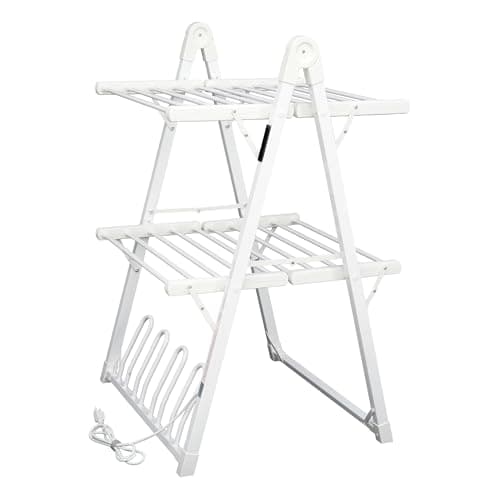 SHARNDY Heated Clothes Drying Rack, Foldable with Timer (White)Top pickThe only compact heated rack here that publishes a wattage. At a rated 270 W you can work out the bill before you buy it, which is not true of most of this category. | Knowing what it costs | 23"D x 39"W x 25"H | |
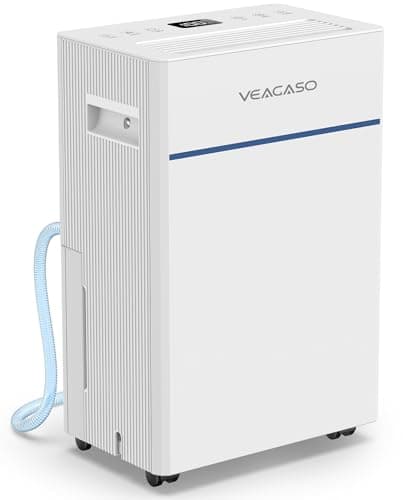
| 2 | 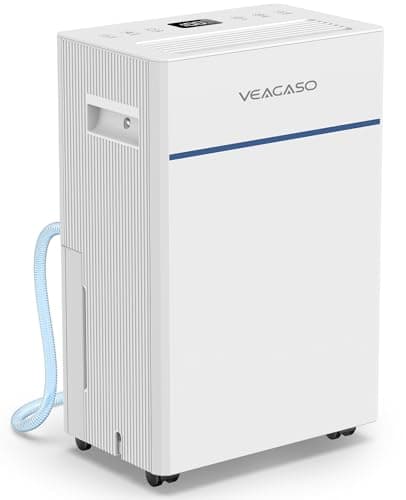 VEAGASO Dehumidifier, 28 Pints, 2000 Sq Ft28 pints a day on a published 158 W draw - the best pints-per-watt figure here, and quiet enough at 38 dB to run in a bedroom. | Drying a load overnight | 10.6"D x 6.7"W x 15.9"H | |
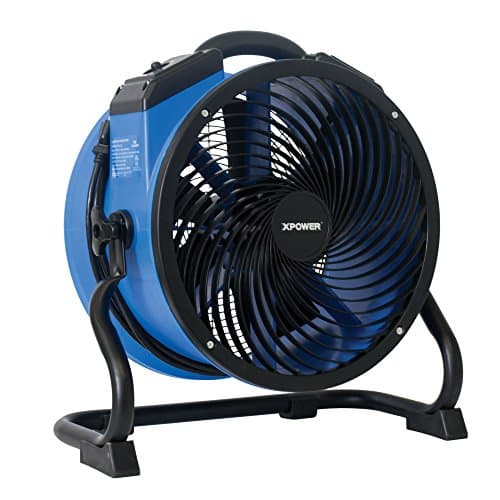
| 3 | 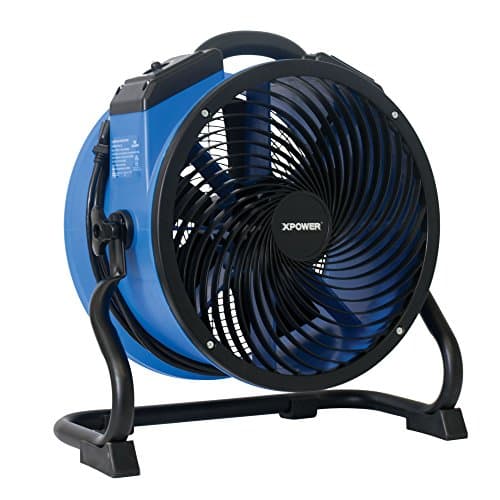 XPOWER FC-300 Air Mover / Whole Room Air Circulator2100 cfm on a published 100 W. That is more than seven times the airflow of a typical utility fan for the same power draw, and airflow is what dries laundry. | The fastest air over a rack | 18.6"D x 19.2"W x 9.4"H |
Every answer to this question that does not name a comparison is useless, because the arithmetic changes by a factor of ten depending on what the rack is replacing.
Three break-evens
| Replacing | Cost per load now | Saved per load | Loads to break even | At 3 loads a week |
|---|---|---|---|---|
| Electric tumble dryer at home | 46¢ | 21¢ | 711 | About 4.5 years |
| Laundromat at $2.00 | $2.00 | $1.75 | 86 | About 7 months |
| Laundromat at $4.00 | $4.00 | $3.75 | 40 | About 3 months |
| Nothing - already air-drying | 0¢ | None | Never | Never |
The last row is the honest one
If you already air-dry on an unpowered rack, a heated rack saves you nothing at all. It costs money to buy and money every session to run, and what you get for it is time. That is a legitimate purchase - hours matter - but it is a convenience purchase, not a saving, and the listings in this category strongly imply otherwise.
What you are actually buying
- Hours. A load that took most of a day takes an evening. In a small apartment where the rack is in your living space, that is worth real money.
- Winter capability. A cold room dries laundry very slowly. Heat is what is missing, and this is the season heated racks earn their keep.
- Warm towels. A minor luxury and a genuine one.
What you are not buying
- A drier room. All the moisture still goes into your air. If damp is your problem, buy a dehumidifier instead - it costs about the same to run and fixes both.
- Softness. Air-dried cotton is stiff because it is not agitated while drying. Heat does not change that.
- Dryer speed. Even a covered 1300 W rack takes hours.
Our answer, by situation
| Your situation | Verdict |
|---|---|
| Laundromat every week, no machine at home | Yes - it pays back in months |
| Washer at home, no dryer, cold apartment | Yes - you are buying winter hours |
| Washer and dryer at home | No - $33 a year is not worth five hours a load |
| Damp apartment, fogging windows | No - buy a dehumidifier first |
| Already air-drying happily | Only if drying time is genuinely the problem |
The three things to consider
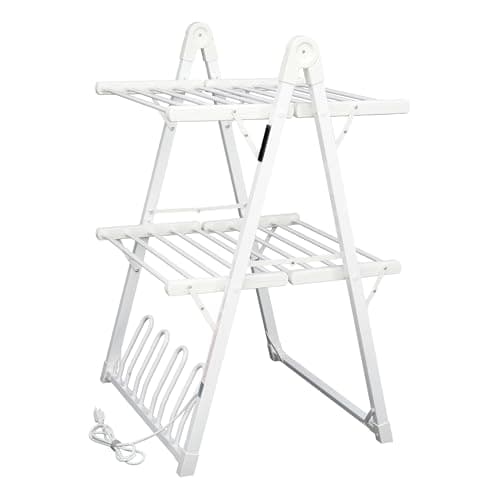
Top pick · Knowing what it costs
SHARNDY Heated Clothes Drying Rack, Foldable with Timer (White)
The only compact heated rack here that publishes a wattage. At a rated 270 W you can work out the bill before you buy it, which is not true of most of this category.
What the manufacturer publishes
- Open
- 23"D x 39"W x 25"H
- Folded
- Collapses to approximately 41.34" x 25.98" x 2"
- Drying line
- 2 tiers plus a shoe rack (linear feet not published)
- Load capacity
- Not published
- Material
- Aluminum
- Rated wattage
- 270 W
Costs 5¢ an hour to run - 24.8¢ for a 5-hour session, at 18.34¢/kWh (US residential average, June 2026).
Figures from Manufacturer listing on Amazon, retrieved 2026-09-02.
270 W is a published, checkable number, and it is the reason this is the top pick. Everything else in the compact class publishes a temperature range instead, which cannot be turned into money.
At the current US average rate a 270 W rack costs about 5 cents an hour to run. Five hours is roughly 25 cents - less than a fifth of what the same load costs in a tumble dryer.
The 2 inch folded thickness is the other reason it suits an apartment: it goes behind a door, which a rigid heated tower does not.
SHARNDY publishes no load capacity. The frame is aluminum and light; treat it as a shirts-and-underwear rack rather than a bedding rack.
Good
- Publishes a rated wattage - most of this category does not
- Folds to about 2 inches thick
- Built-in timer and three-stage overheat protection
- Dedicated shoe section
Not so good
- No published load capacity
- No published drying-line length
Skip this if you need to dry a full load at once. This is a 39 inch wide rack, not a substitute for a dryer.
#ad · how this is funded · price as of October 16, 2026
Pick 2 · Drying a load overnight
VEAGASO Dehumidifier, 28 Pints, 2000 Sq Ft
28 pints a day on a published 158 W draw - the best pints-per-watt figure here, and quiet enough at 38 dB to run in a bedroom.
What the manufacturer publishes
- Open
- 10.6"D x 6.7"W x 15.9"H
- Folded
- Not applicable
- Drying line
- Not applicable
- Load capacity
- 28 pints per day
- Material
- Compressor dehumidifier
- Rated wattage
- 158 W
Costs 2.9¢ an hour to run - 14.5¢ for a 5-hour session, at 18.34¢/kWh (US residential average, June 2026).
Figures from Manufacturer listing on Amazon, retrieved 2026-09-02.
A dehumidifier does not blow air at your laundry; it removes the water your laundry has just put into the room. That is why it dries a closed room full of washing and a fan does not.
158 W is the number to compare against a heated rack. Running it for eight hours costs about 23 cents at the current US average rate - roughly what a 270 W heated rack costs for five.
38 dB is quiet enough to sleep through, which matters because the natural way to use one is overnight in a closed room with the rack.
This is a compressor unit, not a thermoelectric one, which is why it can pull 28 pints where the small desktop units manage a fraction of that.
Good
- 158 W published - the running cost is calculable
- 28 pints per day
- 38 dB quiet mode
- 16.5 lb, portable between rooms
Not so good
- 35.3 cfm airflow is modest, so it works best in a closed room
- Compressor units lose capacity in a cold room
- Tank needs emptying or a hose run
Skip this if your drying room is under about 60 F. Compressor dehumidifiers slow down badly in the cold - that is a physics limit, not a brand problem.
#ad · how this is funded · price as of October 16, 2026
Pick 3 · The fastest air over a rack
XPOWER FC-300 Air Mover / Whole Room Air Circulator
2100 cfm on a published 100 W. That is more than seven times the airflow of a typical utility fan for the same power draw, and airflow is what dries laundry.
What the manufacturer publishes
- Open
- 18.6"D x 19.2"W x 9.4"H
- Folded
- Not applicable
- Drying line
- Not applicable
- Load capacity
- 2100 cfm
- Material
- Housing with high-torque induction motor
- Rated wattage
- 100 W
Costs 1.8¢ an hour to run - 9.2¢ for a 5-hour session, at 18.34¢/kWh (US residential average, June 2026).
Figures from Manufacturer listing on Amazon, retrieved 2026-09-02.
2100 cfm at 100 W is the specification that matters. Air movement is the single biggest lever on indoor drying time, and this delivers the most of it per watt of anything here.
One hundred watts for four hours is about 7 cents at the current US average rate. Running a fan alongside an unheated rack is close to the cheapest intervention available.
The three-hour timer means you can start it when you hang the load and not think about it, which is how it ends up actually getting used.
It is a floor blower, so it is directional. Aim it along the length of the rack, not at one garment.
Good
- 2100 cfm - by far the most airflow here
- 100 W published
- 3-hour timer
- Four speeds
Not so good
- Loud at full speed - this is shop equipment
- 13 lb and 18 inches across
- Directional, so placement matters
Skip this if the rack is in a bedroom you sleep in. A 2100 cfm air mover is not a quiet appliance.
#ad · how this is funded · price as of October 16, 2026
The same question for an ordinary unpowered rack has a much shorter answer, because there is no running cost on the other side of the ledger: are drying racks worth it.
Common questions
Are heated clothes airers worth the money?
Against a laundromat, yes - a $150 rack pays for itself in roughly 40 to 65 loads. Against a tumble dryer you already own, no: the break-even is about 700 loads.
How long does it take a heated drying rack to pay for itself?
About three to seven months if it replaces laundromat drying at three loads a week. About four and a half years if it replaces a home electric dryer.
Is a heated airer better than a dehumidifier?
For drying speed in a ventilated cold room, yes. For a small closed apartment, no - a dehumidifier costs about the same to run and removes the moisture instead of adding it.
Do heated drying racks save money?
Only relative to something more expensive. Against an unpowered rack they cost money, both to buy and to run. What they buy is time, not savings.
Sources
- U.S. Energy Information Administration - Electric Power Monthly, Table 5.3 (average residential price of electricity) - retrieved 2026-09-02
- ENERGY STAR - Clothes Dryers product criteria and energy use - retrieved 2026-09-02
- Manufacturer listing on Amazon - retrieved 2026-09-02
Read next
What a heated drying rack actually costs to run
The calculator and the arithmetic: per hour, per session and per month, at a cited US electricity rate, against a tumble dryer.
Heated drying rack vs tumble dryer
Cost per load, drying time, capacity and installation, in US dollars at a cited electricity rate.
Heated drying rack vs dehumidifier
Running cost, mechanism and effect on room humidity for the two main ways of speeding up indoor drying.
Do heated drying racks work?
The physics of a heated rack in plain language: what the heat does, what it cannot do, and when it makes little difference.

The best fans for drying clothes
Three fans compared on airflow per watt and noise level, with running cost per load and where to place one.

The best clothes drying racks for an apartment
Six standing racks ranked on published specs rather than adjectives, with the one we would not buy named and explained.