Drying rack covers and tents
The cheapest genuine speed-up in indoor drying, and the one thing that makes a heated rack behave the way the marketing suggests.
We have not tested these products and we do not pretend to have. Here is what we did instead. Links to Amazon earn us a commission at no extra cost to you - disclosure.

| # | Rack | Best for | Open footprint | Price |
|---|---|---|---|---|
| 1 | 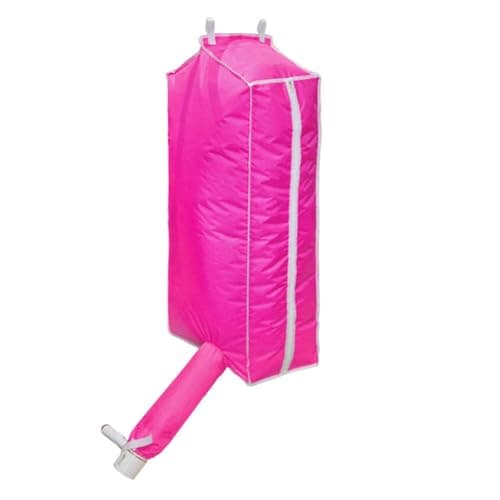 DimyFew Portable Dryer Cover / Clothes Tent EnclosureTop pickA ripstop tent that goes over a standing rack and traps the warm air. The cheapest genuine speed-up available if you already have a rack. | Making a rack you already own faster | 30"D x 55"W x 110"H | |
| 2 | No image DYWOZDP Electric Clothes Dryer with Remote and Timer, 1300 WA 1300 W heated frame inside a zip-up cover. Far quicker than an unheated rack and far more expensive to run than the 270 W racks - both of which follow directly from the wattage. | Drying a load overnight | 19.6"D x 29.5"W x 59"H | Check price#ad |
In the countries where heated drying racks are ordinary household objects, they are almost always sold with a cover, and the reason is that the cover does more of the work than the element does.
Why a cover works
Warm air rises. On an open heated rack most of the warmth the element produces goes straight past the laundry and collects at your ceiling. A cover turns the rack into a small enclosed volume where that air stays in contact with the garments and circulates over them repeatedly.
There is a second benefit that matters more in a small apartment: the moisture leaving your clothes is contained inside the cover for longer rather than immediately dispersing into the room, so the walls and windows get less of it.
What to look for
- Height matched to your rack. This is the main sizing mistake. A 110 inch tent over a 40 inch rack has to warm 70 inches of empty air.
- A zip or opening you can actually use with wet hands and a full rack behind it.
- Ripstop or coated fabric, which holds up to repeated damp cycles better than plain polyester.
- Somewhere for it to dry afterward. A cover that gets folded away damp is the same mildew problem as a towel left in a gym bag.
What a cover will not do
- It will not make an unheated rack fast on its own. With no heat and no airflow, a cover makes a small saturated volume, which is worse than an open rack. Pair it with a fan blowing in, or with heat.
- It will not stop your room getting damp. The water still leaves eventually. It delays and concentrates it rather than removing it.
- It will not fit every rack. Covers are usually cut for one shape of frame.
Safety, briefly
Only cover a heated rack with a cover intended for one, and only if your rack's manual permits it. Trapping heat around an element that was not designed for it is exactly the scenario the guidance on overnight and unattended use is about.
The options
Top pick · Making a rack you already own faster
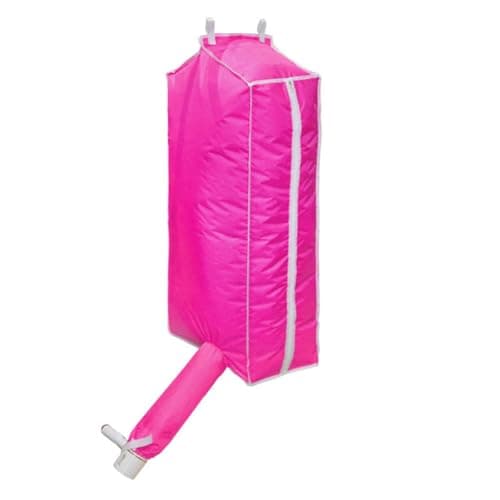
DimyFew Portable Dryer Cover / Clothes Tent Enclosure
A ripstop tent that goes over a standing rack and traps the warm air. The cheapest genuine speed-up available if you already have a rack.
What the manufacturer publishes
- Open
- 30"D x 55"W x 110"H
- Folded
- Folds for storage (dimensions not published)
- Drying line
- Not applicable - an enclosure, not a rack
- Load capacity
- Not applicable
- Material
- Ripstop fabric
Figures from Manufacturer listing on Amazon, retrieved 2026-09-02.
The reason heated racks with covers beat heated racks without them is not the element, it is the enclosure. A cover keeps warm air around the clothes instead of letting it rise into the room.
Used over an unheated rack with a small fan blowing into it, a cover still helps: it turns a room-sized drying volume into a wardrobe-sized one.
At 110 inches tall it is built for a full-height rack. Check the height of yours - over a 40 inch rack, most of the tent is dead space.
Good
- Cheapest way to speed up a rack you already own
- Works with an unheated rack plus a fan
- Packs away when not in use
Not so good
- Sized for tall racks - 110 inches of height to fill
- No load or airflow specifications published
- Trapping moisture in fabric means it needs to dry out afterward
Skip this if your rack is a compact 40 inch model. The tent is far taller than the rack and the extra volume slows things down rather than speeding them up.
#ad · how this is funded · price as of October 16, 2026
Pick 2 · Drying a load overnight
DYWOZDP Electric Clothes Dryer with Remote and Timer, 1300 W
A 1300 W heated frame inside a zip-up cover. Far quicker than an unheated rack and far more expensive to run than the 270 W racks - both of which follow directly from the wattage.
What the manufacturer publishes
- Open
- 19.6"D x 29.5"W x 59"H
- Folded
- Not published
- Drying line
- 2 tiers plus 8 center tubes (linear feet not published)
- Load capacity
- 20 kg (approx 44 lb)
- Material
- Stainless steel
- Rated wattage
- 1300 W
Costs 23.8¢ an hour to run - $1.19 for a 5-hour session, at 18.34¢/kWh (US residential average, June 2026).
Figures from Manufacturer listing on Amazon, retrieved 2026-09-02.
The cover is what changes the physics. Trapping warm air around the garments is why this dries a load in hours rather than most of a day, and it is also why it does not simply dump that moisture into your room.
1300 W is nearly five times the SHARNDY's draw. At the US average rate that is about 24 cents an hour, so a three-hour cycle costs roughly 72 cents - still less than a tumble-dryer load, but no longer trivial.
44 lb rated and stainless framed, so unlike the compact aluminum racks it will take towels and bedding.
It stands nearly 5 feet tall with the cover on. Measure your ceiling clearance, especially under a low-hung light.
Good
- Publishes a rated wattage and a load capacity
- Cover traps heat, so it dries far faster than an open rack
- 44 lb rating handles towels and bedding
- Remote and timer
Not so good
- 1300 W - roughly five times the running cost of the compact racks
- No published folded dimensions
- Nearly 5 feet tall in use
Skip this if running cost is your reason for air-drying. At 1300 W the arithmetic gets much closer to a tumble dryer than the rest of this page.
Common questions
Do heated airer covers work?
Yes, and they make more difference than a higher-wattage element does. The cover keeps warm air in contact with the garments instead of letting it rise past them to the ceiling.
Can you use a cover on an unheated drying rack?
Only with a fan blowing into it. On its own, a cover over an unheated rack just makes a small saturated volume, which dries slower than an open rack.
What size drying rack cover do I need?
One matched to your rack's height. Oversized tents leave dead air that has to be warmed for no benefit, which slows the whole thing down.
Is it safe to cover a heated drying rack?
Only with a cover made for the purpose and only if your rack's manual permits it. Draping an ordinary sheet over a heating element is not the same thing and is not safe practice.
Sources
- Manufacturer listing on Amazon - retrieved 2026-09-02
- Manufacturer listing on Amazon - retrieved 2026-09-02
- U.S. Environmental Protection Agency - Mold Course, moisture and indoor relative humidity - retrieved 2026-09-02
Read next
Do heated drying racks work?
The physics of a heated rack in plain language: what the heat does, what it cannot do, and when it makes little difference.

The best heated drying racks
Six powered racks ranked with the running cost computed from published wattage - and the three that publish no wattage named.
Can you leave a heated drying rack on overnight?
What heated-rack manufacturers publish about unattended use, the safety features they list, and the practical guidance that follows.

How to dry clothes faster indoors
Every lever on indoor drying speed, ranked by time saved and priced per load, from the free habits to the appliances.
The best fans for drying clothes
Three fans compared on airflow per watt and noise level, with running cost per load and where to place one.