Drying clothes in a bathroom
The right room for the first hour and the wrong room for the next eight, unless you fix the airflow.
We have not tested these products and we do not pretend to have. Here is what we did instead. Links to Amazon earn us a commission at no extra cost to you - disclosure.
| # | Rack | Best for | Open footprint | Price |
|---|---|---|---|---|
| 1 | 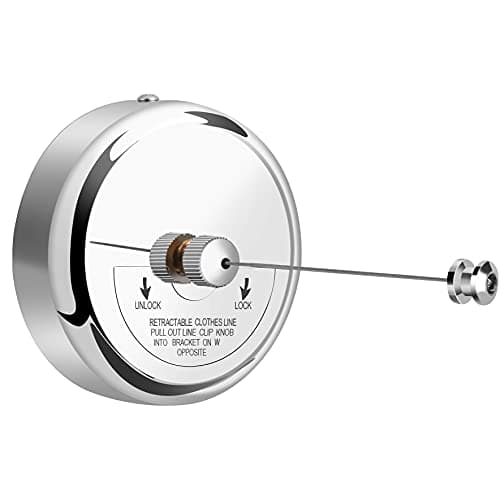 Clatoon Retractable Clothesline, 9 ft AdjustableTop pickNine feet of 304 stainless in the cheapest casing worth buying. For a shower cubicle or a single window, nine feet is enough. | The smallest bathroom | Extends to 9 ft | |
| 2 | 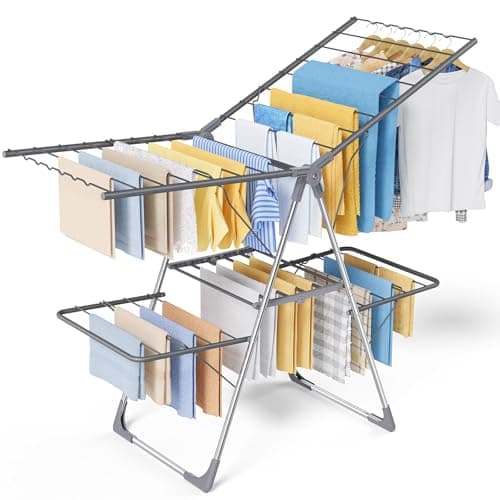 Sakugi Clothes Drying Rack, 2-Level with 55.5" Adjustable WingsStainless steel throughout with 3.5 inch rod spacing - built for the bathroom, where coated steel eventually rusts. | Damp rooms | 22.8"D x 55.5"W x 36.6"H | |
| 3 | 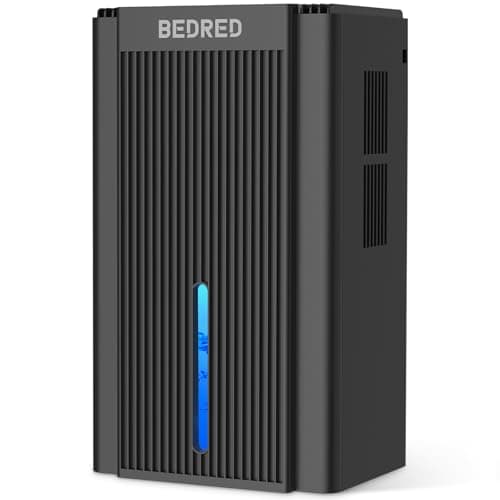 BEDRED Dehumidifier, 95 oz Tank, 1000 Sq FtA thermoelectric unit at a published 85 W. Quieter and cheaper to run than a compressor, and it pulls a fraction of the water. | A small closed room | 6.7"D x 8.7"W x 14.6"H |
Almost everyone dries laundry in the bathroom at some point, usually because it is the only room where water on the floor does not matter. It solves that problem completely and creates a different one.
Why a bathroom dries slowly
Evaporation needs somewhere for the water to go. A bathroom is the smallest room in most homes, it is usually kept closed, and it starts the day with the highest humidity in the house. Add a wet load and the air saturates within an hour, at which point drying nearly stops.
This is not a rack problem and no rack fixes it. The fix is moving air, and there are only three ways to get it.
The three ways to fix the airflow
| Method | Cost to run | Effectiveness | Notes |
|---|---|---|---|
| Extractor fan, run continuously | A few cents a day | Good | Most are undersized; run it for hours, not minutes |
| Window open | Free | Good in mild weather | Poor in winter, when you need it most |
| Dehumidifier in the room | About 15-23¢ a session | Best in a closed room | Also stops mold on the grout |
| Door left open | Free | Moves the problem to the next room | Fine if that room is ventilated |
Materials: this is the room that destroys racks
Permanently damp air is what kills coated steel. Chrome plating and powder coat both chip, and rust starts under the coating where you cannot see it, then transfers a brown mark onto a wet white shirt.
In a bathroom, buy stainless steel or aluminum only. Both are uncoated, so there is nothing to chip. Where a retractable line publishes a grade, 304 stainless is the one to look for. Wooden racks are the wrong answer here - bamboo absorbs moisture and joints that stay wet develop mold. The whole comparison is on drying rack materials.
A bathroom setup that works
- A line across the tub for the drip phase. Everything that drips goes here first, and the drips land where they are meant to.
- A small stainless rack for what stays in the bathroom - towels mostly, which are the items least bothered by slow drying.
- The extractor running the whole time, not just for the ten minutes after a shower.
- Everything else moved out once it stops dripping, to a room with moving air.
- Mold watch on the grout. Persistent bathroom drying without ventilation is a mold risk on tile grout and around window frames.
The smell, specifically
Laundry that stays damp for more than about a day in still, warm air develops a musty smell that survives being dry. Bathrooms are the most common place this happens, for all the reasons above. The full explanation and the fix are on air-drying without the smell.
What to use
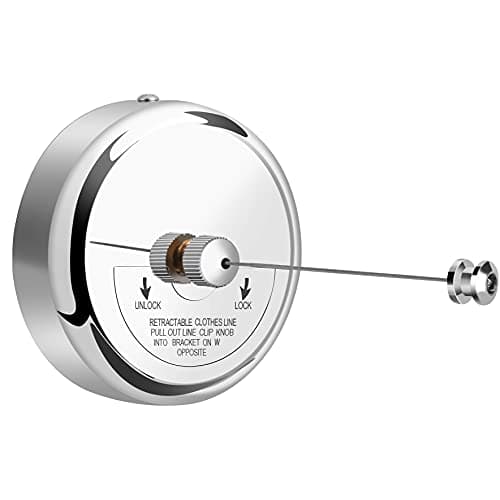
Top pick · The smallest bathroom
Clatoon Retractable Clothesline, 9 ft Adjustable
Nine feet of 304 stainless in the cheapest casing worth buying. For a shower cubicle or a single window, nine feet is enough.
What the manufacturer publishes
- Open
- Extends to 9 ft
- Folded
- Retracts fully into its shell
- Drying line
- 9 feet
- Load capacity
- Not published
- Material
- 304 stainless steel
Figures from Manufacturer listing on Amazon, retrieved 2026-09-02.
Nine feet spans a standard shower cubicle or a bathtub with room to spare, which is where most apartment drying actually happens.
Same 304 stainless grade as the more expensive lines, at a fraction of the price - the saving is in the casing and the tensioner, not the wire.
Without a tightener, expect some sag once the line is loaded. On a nine-foot span that is far less of a problem than on sixteen.
Good
- Cheapest 304 stainless line here
- Right length for a shower or a window
- Retracts fully
Not so good
- No published load capacity
- No tensioner, so it sags under load
- 9 feet is short
Skip this if you want to dry a full load on a line. Nine feet holds a handful of items, not a load.
#ad · how this is funded · price as of October 16, 2026
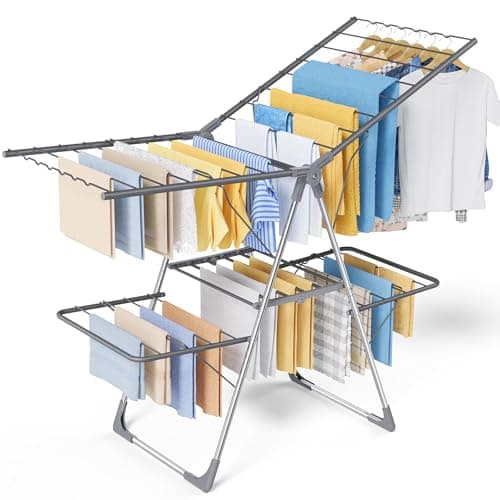
Pick 2 · Damp rooms
Sakugi Clothes Drying Rack, 2-Level with 55.5" Adjustable Wings
Stainless steel throughout with 3.5 inch rod spacing - built for the bathroom, where coated steel eventually rusts.
What the manufacturer publishes
- Open
- 22.8"D x 55.5"W x 36.6"H
- Folded
- 40.3" x 22.8"
- Drying line
- Two levels, four height positions (linear feet not published)
- Load capacity
- Not published
- Material
- Stainless steel
Figures from Manufacturer listing on Amazon, retrieved 2026-09-02.
Stainless is the material answer to a bathroom. Chrome plating and powder coat both fail at a scratch; stainless does not have a coating to lose.
The 3.5 inch rod spacing is published, and it is the one spec that maps directly to drying time. Wider gaps mean air reaches both faces of a garment instead of one.
Sakugi does not publish a load capacity. We are not going to estimate one from the frame photos, so this is the rack you buy for material and spacing rather than for a weight number.
Good
- Stainless steel, so no coating to chip in a wet room
- 3.5 inch rod spacing published and generous
- Folds to a stated 40.3 x 22.8 inches
- Four wing height positions
Not so good
- No published load capacity
- 5.1 kg, heavier than most folding racks
Skip this if you need a stated weight rating before you buy. That number is genuinely absent from this listing.
#ad · how this is funded · price as of October 16, 2026
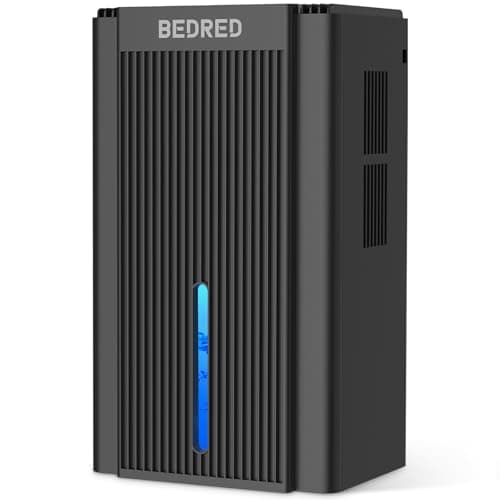
Pick 3 · A small closed room
BEDRED Dehumidifier, 95 oz Tank, 1000 Sq Ft
A thermoelectric unit at a published 85 W. Quieter and cheaper to run than a compressor, and it pulls a fraction of the water.
What the manufacturer publishes
- Open
- 6.7"D x 8.7"W x 14.6"H
- Folded
- Not applicable
- Drying line
- Not applicable
- Load capacity
- 95 oz tank
- Material
- Thermoelectric (Peltier) dehumidifier
- Rated wattage
- 85 W
Costs 1.6¢ an hour to run - 7.8¢ for a 5-hour session, at 18.34¢/kWh (US residential average, June 2026).
Figures from Manufacturer listing on Amazon, retrieved 2026-09-02.
Thermoelectric is a genuinely different technology, not a smaller compressor. It has no moving compressor, so it is near-silent, and it extracts far less water per hour.
The listing publishes a tank size, not a pints-per-day extraction rate. Those are not the same number and cannot be compared with the compressor units above.
85 W is real and low. For a small closed bathroom with one rack in it, this is enough. For a bedroom full of wet laundry it is not.
Good
- 85 W published - the cheapest to run here
- Near-silent, no compressor
- Small enough to sit on a shelf
- Auto shut-off when full
Not so good
- Publishes a tank size, not an extraction rate
- Thermoelectric units extract far less water than compressors
- Loses effectiveness in a cold room even faster than a compressor
Skip this if you are drying a full load in a bedroom. Buy a compressor unit and accept the noise - this is a bathroom-sized device.
#ad · how this is funded · price as of October 16, 2026
For the towels that live in the bathroom permanently rather than a washed load passing through, a freestanding stand keeps them off the floor and spread apart - the bar widths and rail gaps are compared on freestanding towel drying racks.
There is also a rack built specifically to stand across a bathtub, which is the only version of this arrangement where the drips land somewhere already plumbed for them. Leifheit's Pegasus V publishes up to 19 meters of adjustable line and folds to under two inches - it is covered with the rest of that range on Leifheit drying racks in the US.
Common questions
Is it bad to dry clothes in a bathroom?
It is the right place for the first hour, while laundry drips, and a poor place afterward. Bathrooms are small, enclosed and already humid, so the air saturates fast and drying stalls unless the extractor runs or a window is open.
Does drying clothes in a bathroom cause mold?
It can. Repeatedly adding several pints of water to a small unventilated room is a mold risk on grout, sealant and window frames. Ventilation or a dehumidifier prevents it.
What kind of drying rack is best for a bathroom?
Stainless steel or aluminum, never coated steel and never wood. Coated racks chip and rust in damp air, and wooden ones absorb moisture at the joints.
Should you leave the bathroom fan on while drying clothes?
Yes, for the whole drying period rather than a few minutes. Most domestic extractors are undersized for a full drying load, so hours rather than minutes is what makes the difference.
Sources
- U.S. Environmental Protection Agency - Mold Course, moisture and indoor relative humidity - retrieved 2026-09-02
- Manufacturer listing on Amazon - retrieved 2026-09-02
- Manufacturer listing on Amazon - retrieved 2026-09-02
- U.S. Energy Information Administration - Electric Power Monthly, Table 5.3 (average residential price of electricity) - retrieved 2026-09-02
Read next
Drying rack materials, and how each one fails
Six rack materials compared by failure mode rather than by marketing, with a clear answer for damp rooms.
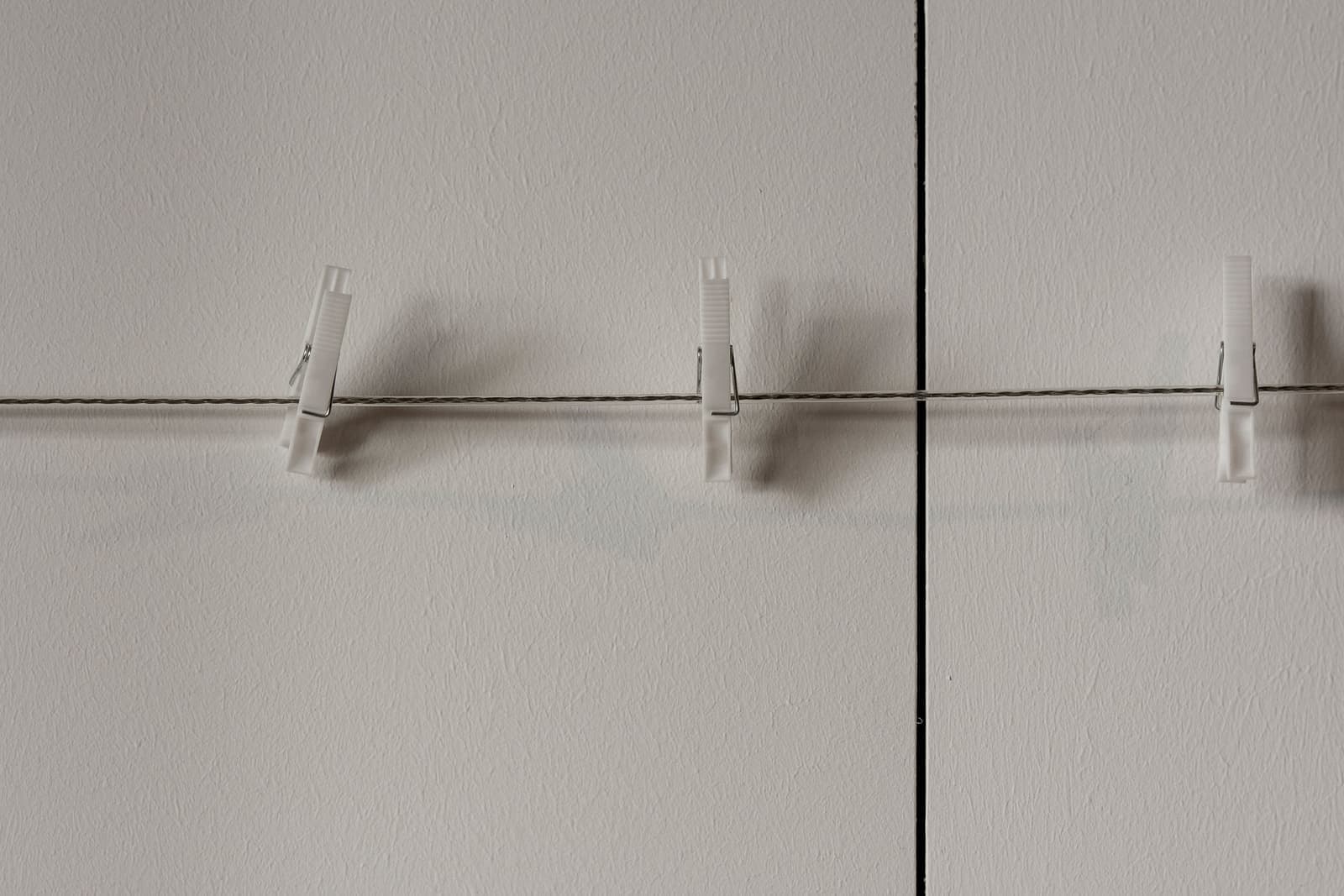
The best retractable clotheslines
Retractable lines compared on span, steel grade and the anti-sag design that decides whether the line is usable when loaded.

How to air-dry clothes inside without the smell
Why indoor-dried laundry goes musty, the four things that prevent it, and how to rescue clothes that already smell.
Drying clothes indoors, humidity and condensation
Where the water from indoor drying actually goes, what humidity level to aim for, and how to avoid the condensation that follows.
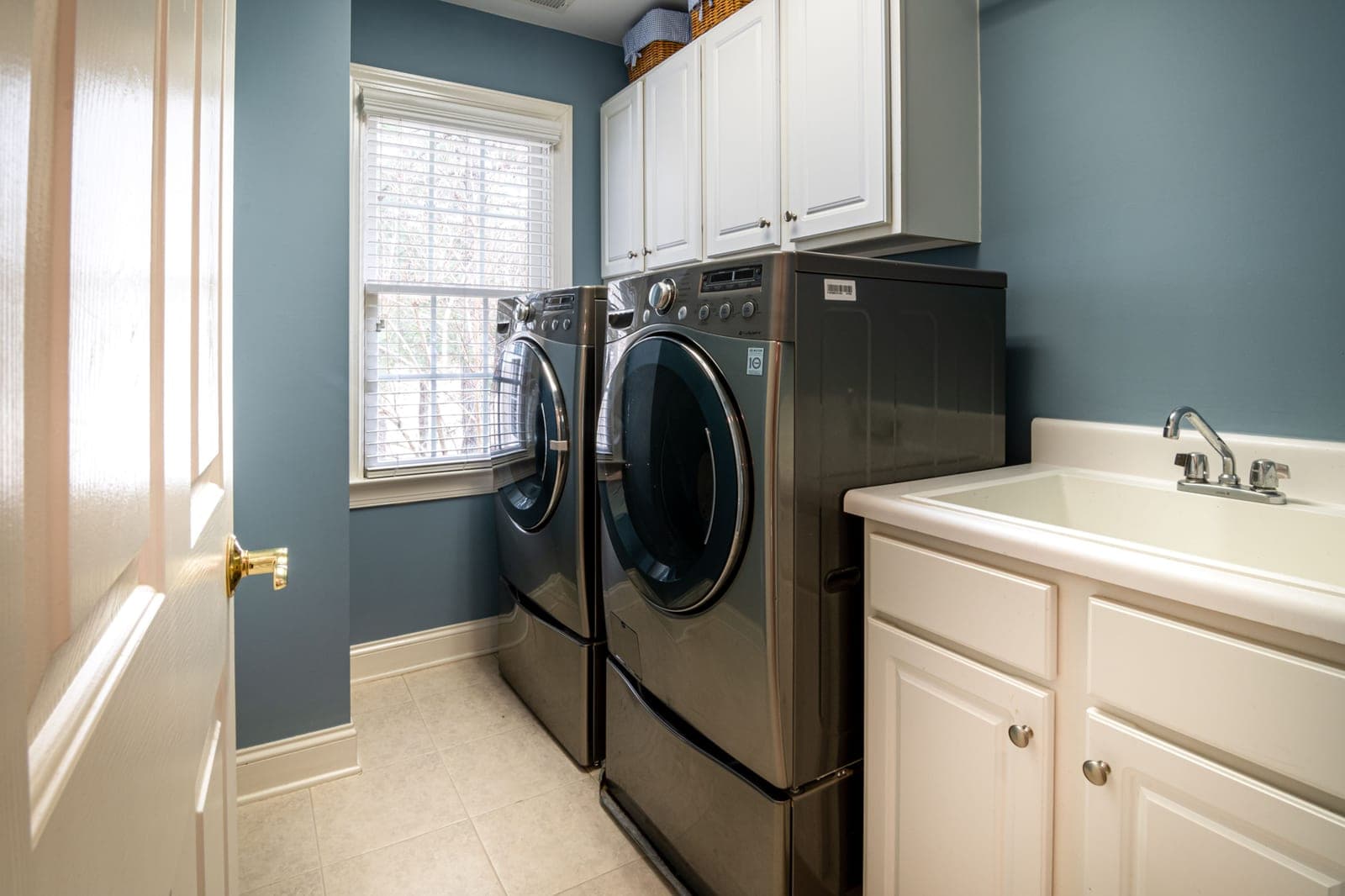
The best dehumidifiers for drying clothes
Four dehumidifiers ranked on published extraction, wattage and airflow, with cost per drying session computed.
The best heated towel rails
Wall-mounted heated rails compared on published wattage, bar count and steel grade, with cost per session computed at a cited rate.