XPOWER FC-300 air mover review
The most air per watt of anything on this site, in a box that takes nearly as much floor as the drying rack it is pointed at.
We have not tested these products and we do not pretend to have. Here is what we did instead. Links to Amazon earn us a commission at no extra cost to you - disclosure.

| # | Rack | Best for | Open footprint | Price |
|---|---|---|---|---|
| 1 | 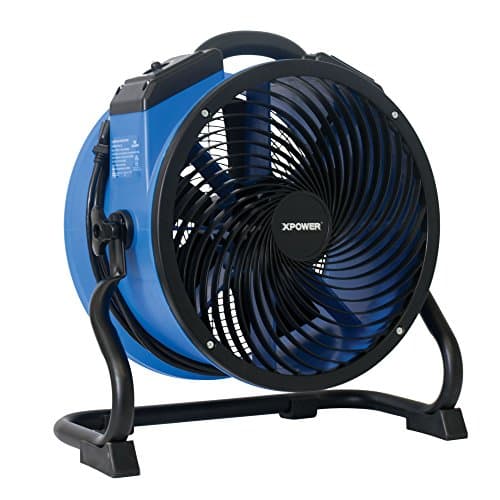 XPOWER FC-300 Air Mover / Whole Room Air CirculatorTop pick2100 cfm on a published 100 W. That is more than seven times the airflow of a typical utility fan for the same power draw, and airflow is what dries laundry. | The fastest air over a rack | 18.6"D x 19.2"W x 9.4"H | |
| 2 | 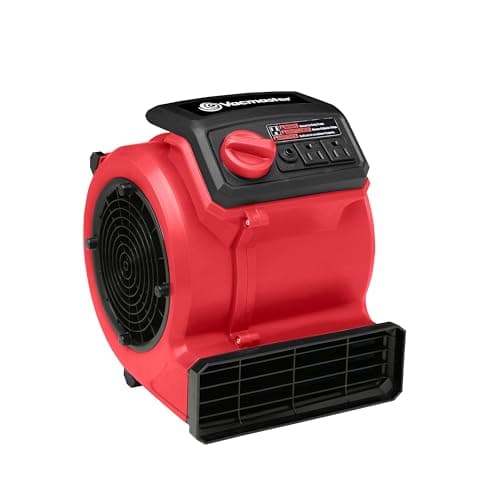 Vacmaster AM201 Air Mover and Fitness Fan, 550 CFM550 cfm at a published 45 dB. Less air than the XPOWER, but quiet enough to leave running overnight in a room you are in. | Airflow you can sleep near | 13.06"D x 10.53"W x 12.67"H | |
| 3 | 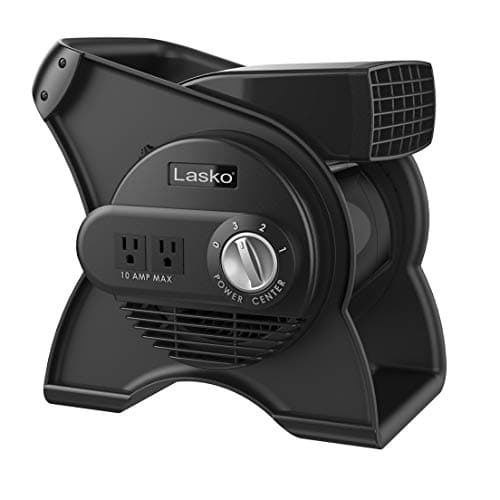 Lasko Pivoting High Velocity Utility Fan, 12"289 cfm at 100 W with a 270 degree pivot. Not a specialist drying fan, but it is the general-purpose one most apartments should own anyway. | A fan you already half-own | 12.2"D x 9.6"W x 12.3"H |
Why a laundry site recommends a shop fan
The FC-300 is the top pick on fans for drying clothes and it appears on roughly a dozen pages here, which is more than any other single product on this site. It is also, plainly, a utility fan built for water-damage restoration rather than for a bedroom, and that deserves an explanation rather than a photograph.
Air drying is rate-limited by one thing: the saturated layer of air sitting against the wet fabric. Evaporation stops at that boundary until the layer is replaced. A fan does not remove a drop of water from your home - that is a dehumidifier's job - it strips that boundary layer and lets evaporation continue. How well a fan does that is a question about how much air it moves and where it aims it, which is exactly what an air mover is designed around and what a decorative fan is not.
The published specifications
| Product | Open | Folded | Drying line | Load | Material | Watts |
|---|---|---|---|---|---|---|
| XPOWER FC-300 Air Mover / Whole Room Air Circulator | 18.6"D x 19.2"W x 9.4"H | Not applicable | Not applicable | 2100 cfm | Housing with high-torque induction motor | 100 W |
| Vacmaster AM201 Air Mover and Fitness Fan, 550 CFM | 13.06"D x 10.53"W x 12.67"H | Not applicable | Not applicable | 550 cfm | Housing with three-speed motor | 223.6 W |
| Lasko Pivoting High Velocity Utility Fan, 12" | 12.2"D x 9.6"W x 12.3"H | Not applicable | Not applicable | 289 cfm | Housing with grounded outlets | 100 W |
Every figure is the manufacturer’s own, read from its listing on 2026-09-02. Where a cell says not published, that specification is genuinely absent - we do not estimate one. How we work.
One note on that table before the arithmetic: the CFM figures for all three are free-air ratings, which is how every fan manufacturer publishes them. They are an upper bound measured with nothing in the way, not the airflow that reaches the far side of a loaded rack. The comparison between them is fair because all three are measured the same way; the absolute numbers are optimistic for all three equally.
The number that settles it: air moved per watt
| Fan | Published CFM | Rated watts | CFM per watt | Floor taken |
|---|---|---|---|---|
| XPOWER FC-300 | 2,100 | 100 W | 21.0 | 2.48 sq ft |
| Lasko U12104 | 289 | 100 W | 2.9 | 0.81 sq ft |
| Vacmaster AM201 | 550 | 223.6 W | 2.5 | 0.96 sq ft |
That is the whole case for this fan, and it is a larger gap than it looks. The FC-300 and the Lasko carry the same rated wattage - 100 watts each - and the XPOWER moves 7.3 times as much air for it. Against the Vacmaster it moves 3.8 times the air on 45% of the power. In a category where most of the marketing is about blade count and oscillation, that ratio is the only figure that touches how fast your laundry dries.
The mechanism XPOWER names for it is the grille: the listing credits a high-torque motor and a grille designed to focus the airflow, claiming a usable throw of 120 feet or more. Treat the 120 feet as a restoration-industry number rather than a domestic one - it describes blowing down a flooded corridor, and your room is twelve feet across - but the concentration it describes is real and it is the reason a low, aimed air mover gets air underneath a loaded rack where a pedestal fan sweeps over the top of it.
What it costs to run
| Product | Rated watts | Per hour | Per 5h session | Per month |
|---|---|---|---|---|
| XPOWER FC-300 Air Mover / Whole Room Air Circulator | 100 W | 1.8¢ | 9.2¢ | $1.19 |
| Vacmaster AM201 Air Mover and Fitness Fan, 550 CFM | 223.6 W | 4.1¢ | 20.5¢ | $2.67 |
| Lasko Pivoting High Velocity Utility Fan, 12" | 100 W | 1.8¢ | 9.2¢ | $1.19 |
Monthly figures assume 3 sessions a week at 5 hours each. Rate: 18.34¢/kWh, US residential average for June 2026, from the U.S. Energy Information Administration, Electric Power Monthly, Table 5.3, retrieved 2026-09-02. Put your own rate in.
Roughly nine cents a session, which is less than the dehumidifier this site recommends and about the same as the 12-inch Lasko for seven times the air. Running cost is not the reason to choose between these three; the air-per-watt column is.
The real cost is floor, not electricity
XPOWER publishes 18.6 by 19.2 inches, which is 357 square inches, or 2.48 square feet of floor. For a site whose entire ranking method is floor space, that number deserves to be said out loud rather than buried: the fan takes 88% as much floor as the Honey-Can-Do 6-tier rack it is pointed at, which publishes 29 by 14 inches and 2.82 square feet.
In a laundry room that is irrelevant. In the studio apartment this site is actually written for, it means the drying corner is now two objects rather than one, and the fan does not fold. The Lasko takes 0.81 square feet and the Vacmaster 0.96, and that - not the price, which is similar - is the honest reason to buy one of them instead.
Where the listing goes quiet
No noise figure, anywhere
XPOWER publishes no decibel rating for the FC-300. Not in the bullets, not in the specification table, not for any of its four speeds. For a 2,100 CFM industrial fan that is the single most important missing number, because noise is the only thing that decides whether you can run it in a one-room apartment while you sleep.
It is worth noting how unusual that silence is. Every dehumidifier this site covers publishes a figure - 38 to 45 dB across the range on dehumidifiers for drying clothes - and those are quieter machines with less to hide. We will not guess a number for it. Assume a shop fan sounds like a shop fan and buy accordingly.
The timer stops at three hours
A three-hour set-and-forget timer is published. That is a genuinely useful feature and it is also a hard ceiling: you cannot set this fan to run an eight-hour overnight cycle and shut itself off. An overnight run means leaving it switched on manually until morning.
In practice three hours on the top speed does most of the available work anyway - the boundary layer is stripped early and the later hours are evaporation rate-limited by the room, which is the argument for pairing a fan with ventilation or a dehumidifier rather than running it longer. But if the plan was a timed overnight cycle, this is not the machine for it, and nothing in the marketing tells you so.
One amp and one hundred watts
The listing advertises a one-amp draw alongside the 2,100 CFM figure, and the rated wattage carried through this site is 100 watts. Those are two different published figures describing the same motor, and the small gap between them is normal for an induction motor. Every cost figure here uses the 100-watt rating, which is the conservative of the two readings and the one the manufacturer states as a wattage.
Is an air mover actually different from a fan?
Yes, and the published numbers show where. A pedestal or box fan is built to stir a whole room's air gently and quietly. An air mover is built to throw a concentrated, high-velocity stream low across a surface, which is why it is shaped like a wedge, sits on the floor, and has a cage rather than a pretty grille.
For laundry, the relevant difference is aim. A rack holds its wet fabric in horizontal layers with still air trapped between them, and the layer at the bottom is the slowest to dry. A floor-level air mover drives air into that stack from underneath; a pedestal fan at chest height pushes air across the top of it. The Vacmaster in this comparison is the middle case - a true air mover at 550 CFM with three fixed positions - and the Lasko is a pivoting utility fan, closer to a conventional fan with a hinge.
Who it is for
- Best for anyone who wants a full load dry overnight. 2,100 CFM is the most air of anything here by a factor of four, and air moved is the variable you control. The rest of the levers are on how to dry clothes faster indoors.
- Best for a room you can ventilate. An open window turns the fan's relocated moisture into removed moisture, and that combination beats anything else at this price.
- Best for drying towels, jeans and other heavy items. The slow-drying stack at the bottom of a loaded rack is exactly what a floor-level air mover reaches - see drying racks for jeans and towels.
- Best for anyone who already owns one. Half the people reading this have a shop fan in a garage. It is the same machine; you do not need a laundry-branded version of it.
- Not for a studio with no spare floor. 2.48 square feet, 13 pounds, and it does not fold. Buy the Lasko.
- Not for anyone who needs it quiet. No decibel figure is published for any speed, and nothing about the design suggests a flattering one.
What we could not tell you
- How loud it is. No dB figure at any of the four speeds, which is the most consequential gap in the listing.
- Airflow at the rack. The 2,100 CFM is a free-air rating. What arrives at the far side of a loaded rack is less, and no manufacturer publishes that for any fan.
- Duty cycle beyond three hours. The timer caps there; whether continuous operation is intended is not stated.
- Motor life or bearing type. Not published, and this is the part that fails first on any fan.
- Whether the housing can be cleaned. No filter is claimed and no access is described.
- How it compares on noise to the two alternatives. Neither of those publishes a decibel figure either, so there is no honest comparison to make.
The verdict
On the only measurement that connects a fan to drying time - air moved per watt of power - this is not a close contest. 21.0 CFM per watt against 2.9 and 2.5 is a seven-to-eightfold margin, computed from the manufacturers' own figures, and it is why this fan sits on a dozen pages of a site that is otherwise suspicious of anything with a plug.
The two honest marks against it are both about living with it rather than using it: it eats nearly as much floor as a drying rack, and XPOWER will not tell you how loud it is. If either of those is disqualifying, the Lasko at 289 CFM in 0.81 square feet is the sane compromise and it is in the picks below. If neither is, this is the fastest cheap way to turn a two-day indoor load into an overnight one.
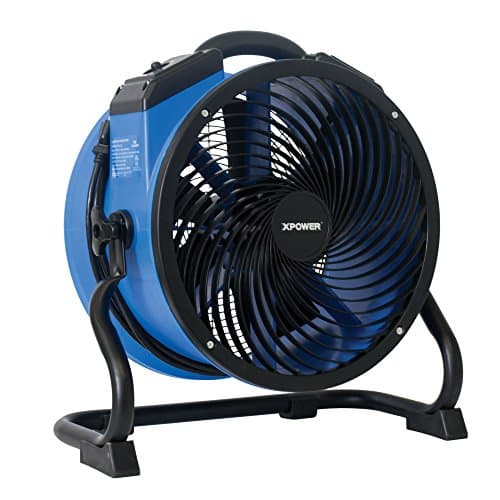
Top pick · The fastest air over a rack
XPOWER FC-300 Air Mover / Whole Room Air Circulator
2100 cfm on a published 100 W. That is more than seven times the airflow of a typical utility fan for the same power draw, and airflow is what dries laundry.
What the manufacturer publishes
- Open
- 18.6"D x 19.2"W x 9.4"H
- Folded
- Not applicable
- Drying line
- Not applicable
- Load capacity
- 2100 cfm
- Material
- Housing with high-torque induction motor
- Rated wattage
- 100 W
Costs 1.8¢ an hour to run - 9.2¢ for a 5-hour session, at 18.34¢/kWh (US residential average, June 2026).
Figures from Manufacturer listing on Amazon, retrieved 2026-09-02.
2100 cfm at 100 W is the specification that matters. Air movement is the single biggest lever on indoor drying time, and this delivers the most of it per watt of anything here.
One hundred watts for four hours is about 7 cents at the current US average rate. Running a fan alongside an unheated rack is close to the cheapest intervention available.
The three-hour timer means you can start it when you hang the load and not think about it, which is how it ends up actually getting used.
It is a floor blower, so it is directional. Aim it along the length of the rack, not at one garment.
Good
- 2100 cfm - by far the most airflow here
- 100 W published
- 3-hour timer
- Four speeds
Not so good
- Loud at full speed - this is shop equipment
- 13 lb and 18 inches across
- Directional, so placement matters
Skip this if the rack is in a bedroom you sleep in. A 2100 cfm air mover is not a quiet appliance.
#ad · how this is funded · price as of October 17, 2026
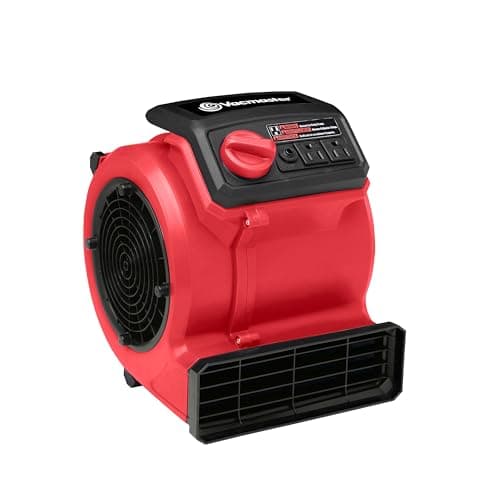
Pick 2 · Airflow you can sleep near
Vacmaster AM201 Air Mover and Fitness Fan, 550 CFM
550 cfm at a published 45 dB. Less air than the XPOWER, but quiet enough to leave running overnight in a room you are in.
What the manufacturer publishes
- Open
- 13.06"D x 10.53"W x 12.67"H
- Folded
- Not applicable
- Drying line
- Not applicable
- Load capacity
- 550 cfm
- Material
- Housing with three-speed motor
- Rated wattage
- 223.6 W
Costs 4.1¢ an hour to run - 20.5¢ for a 5-hour session, at 18.34¢/kWh (US residential average, June 2026).
Figures from Manufacturer listing on Amazon, retrieved 2026-09-02.
45 dB is roughly a quiet refrigerator. That is the specification that makes this an overnight option and the XPOWER not.
The trade is real: 550 cfm against 2100, and 223.6 W against 100. It is both quieter and less efficient per unit of air.
Three positions let you angle it upward under a rack, which is more useful for drying than blowing horizontally at one side of it.
Good
- 45 dB - quiet enough to run overnight
- Three angle positions for directing air under a rack
- 550 cfm
- Stackable receptacles for chaining units
Not so good
- 223.6 W for a quarter of the XPOWER's airflow
- Less air movement means longer drying
- 9 lb
Skip this if the rack is in a room nobody sleeps in. Buy the airflow instead - the XPOWER dries faster for half the watts.
#ad · how this is funded · price as of October 17, 2026
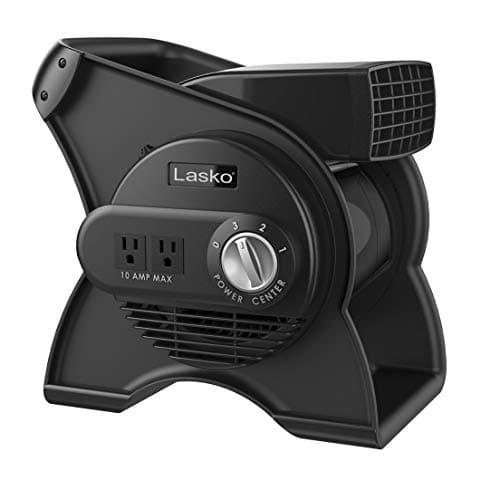
Pick 3 · A fan you already half-own
Lasko Pivoting High Velocity Utility Fan, 12"
289 cfm at 100 W with a 270 degree pivot. Not a specialist drying fan, but it is the general-purpose one most apartments should own anyway.
What the manufacturer publishes
- Open
- 12.2"D x 9.6"W x 12.3"H
- Folded
- Not applicable
- Drying line
- Not applicable
- Load capacity
- 289 cfm
- Material
- Housing with grounded outlets
- Rated wattage
- 100 W
Costs 1.8¢ an hour to run - 9.2¢ for a 5-hour session, at 18.34¢/kWh (US residential average, June 2026).
Figures from Manufacturer listing on Amazon, retrieved 2026-09-02.
289 cfm is a seventh of the XPOWER's airflow at the same 100 W, which tells you how much of an air mover's design is about efficiency rather than raw power.
The 270 degree pivot is the useful part for drying: point it up into a rack from below and the air goes through the garments rather than across them.
At 59.3 dB it sits between the air mover and the quiet Vacmaster. Tolerable in a living room, borderline in a bedroom.
Good
- 100 W published
- 270 degree pivot aims air up into a rack
- Two grounded pass-through outlets
- Useful year-round, not just on laundry day
Not so good
- 289 cfm - far less air than a purpose-built air mover
- 59.3 dB
- 7.5 lb
Skip this if drying speed is the only reason you are buying a fan. Buy the air mover instead.
#ad · how this is funded · price as of October 17, 2026
Common questions
Is an air mover better than a fan for drying clothes?
On published figures, yes, by a wide margin. The XPOWER FC-300 moves 2,100 CFM on a rated 100 watts; a 12-inch pivoting utility fan at the same 100 watts publishes 289 CFM. That is 21.0 cubic feet per minute per watt against 2.9. An air mover also sits on the floor and aims low, which gets air into the bottom of a loaded rack rather than across the top of it.
What is an air mover?
A low, wedge-shaped floor fan built to throw a concentrated high-velocity stream across a surface, originally for drying buildings after water damage. The difference from a household fan is aim and volume rather than anything exotic: the FC-300 publishes 2,100 CFM and a claimed throw of 120 feet or more, where a domestic fan is designed to stir a room gently.
How much does the XPOWER FC-300 cost to run?
About nine cents for a five-hour drying session, computed from its rated 100 watts at 18.34 cents per kilowatt-hour - the US residential average for June 2026 from the EIA. That is roughly $1.19 a month at three sessions a week, and less than the dehumidifier this site recommends.
Is the XPOWER FC-300 loud?
XPOWER does not publish a decibel figure for it at any of its four speeds, so we cannot give you a number and will not invent one. It is an industrial air mover rated at 2,100 CFM; assume it sounds like one. Every dehumidifier on this site publishes a figure between 38 and 45 dB, which makes the silence here conspicuous.
Can you leave an air mover on all night?
The FC-300's set-and-forget timer stops at three hours, so it cannot be set to run an eight-hour cycle and switch itself off. Leaving it switched on manually overnight is possible but it is not a mode the manufacturer provides for, and no continuous-duty rating is published.
How much floor space does the FC-300 take?
XPOWER publishes 18.6 by 19.2 inches, which is 2.48 square feet - about 88% of the floor taken by the Honey-Can-Do 6-tier rack at 2.82 square feet. It does not fold. In a small apartment that is the real cost of this fan, not its price or its electricity.
Sources
- U.S. Energy Information Administration - Electric Power Monthly, Table 5.3 (average residential price of electricity) - retrieved 2026-09-02
- Manufacturer listing on Amazon - retrieved 2026-10-17
- U.S. Environmental Protection Agency - Mold Course, moisture and indoor relative humidity - retrieved 2026-09-02
Read next
The best fans for drying clothes
Three fans compared on airflow per watt and noise level, with running cost per load and where to place one.
Dehumidifier vs fan for drying clothes
Running cost, mechanism and the room condition that decides which of the two is the right purchase.
How to dry clothes faster indoors
Every lever on indoor drying speed, ranked by time saved and priced per load, from the free habits to the appliances.
The best dehumidifiers for drying clothes
Four dehumidifiers ranked on published extraction, wattage and airflow, with cost per drying session computed.

How to air-dry clothes without them getting stiff
The real cause of stiff air-dried laundry and the five fixes, ranked by how much difference each one makes.

The drying gear you do not need
The accessories that do not earn their place in an indoor drying setup, and the free habits that beat them.